(Estimated reading time: 7-8 minutes, depending on how long you linger on each canvas in your mind’s gallery.)
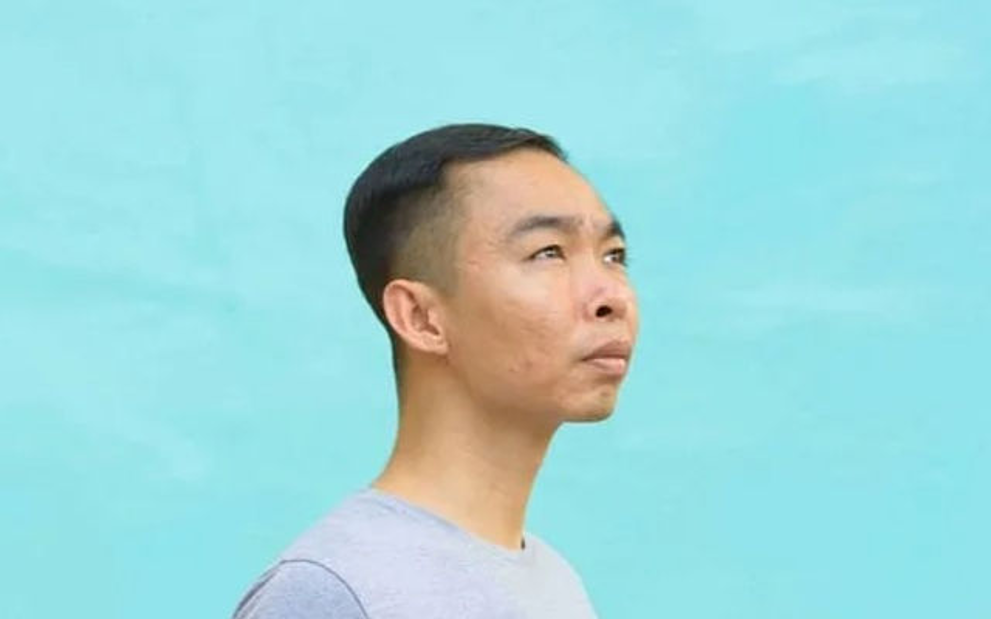
Born in Battambang in 1985 and trained in both graphic design and law, Cambodian painter Chov Theanly has built a striking body of work that captures the fragile balance between survival and aspiration in post‑war Cambodia. From Soviet‑style propaganda echoes to the everyday dreams of Phnom Penh office workers, his paintings invite us to look again at what it means to “rise” after history has knocked you down.
Introduction: Meeting Chov Theanly in the Gallery
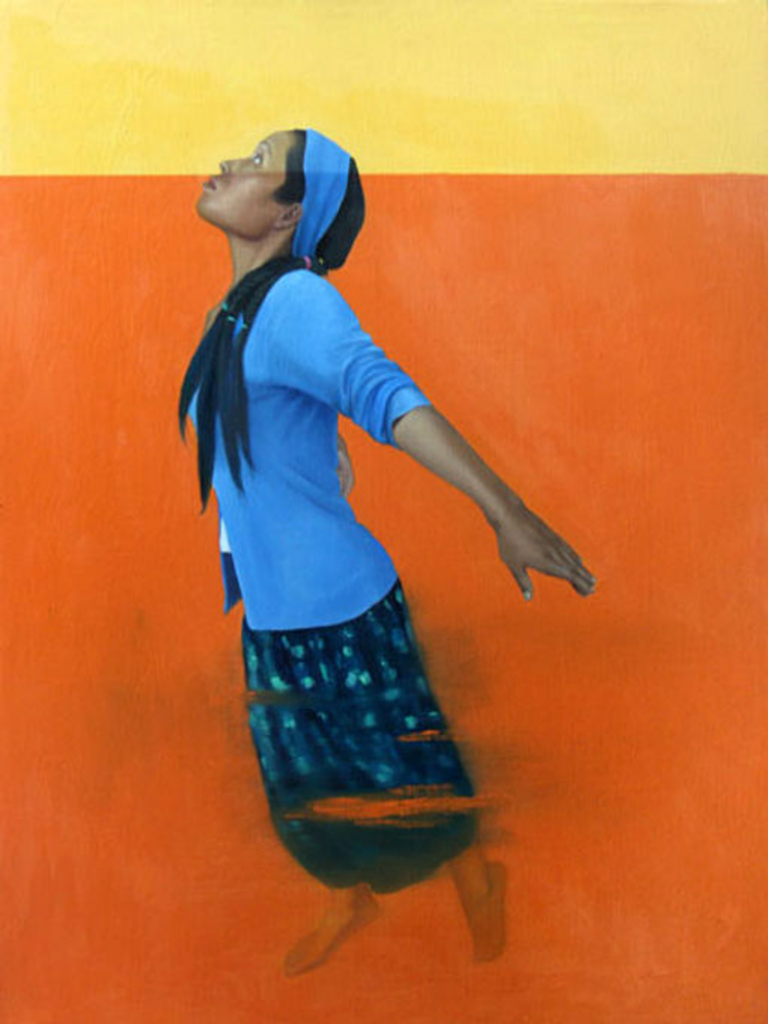
Walk into a contemporary art space in Phnom Penh or Singapore, and you might find yourself face to face with a solitary figure, head tilted back, body stretching toward an invisible horizon, as if balancing between drowning and taking a first full breath. That is often your first introduction to Cambodian painter Chov Theanly (ចូវ ធានលី), one of the most compelling younger artists to emerge from Battambang’s vibrant art scene.
This article is for curious gallery visitors, Cambodia lovers, and culture‑hungry travelers who sense that Cambodian contemporary art is more than Angkor postcards and Apsara silhouettes. It is also for students, curators and casual art fans who want a clear, readable overview of Chov Theanly’s life, influences and exhibitions without having to decode dense academic jargon.
By the end, you will know where Chov comes from, what his paintings are actually about, why people keep mentioning “Surviving” and “The Rise,” and where you might encounter his work in Phnom Penh or overseas. I will also slip in a few practical tips for enjoying his art, so that your next gallery visit feels a little less intimidating and a little more like a conversation with Cambodia itself.
Chov Theanly was born in 1985 in Battambang province, a place that has quietly become a cradle for Cambodian visual artists. Growing up in a country still emerging from decades of conflict, he began learning traditional drawing and painting in 1999 from his uncle, who worked as a sign painter.
Between 2004 and 2007 he studied graphic design at the Vocational Training Center of Battambang, sharpening his sense of composition, line and visual impact. Like many Cambodians of his generation, he also pursued a pragmatic path and completed a law degree in Phnom Penh in 2011, before fully committing to art. His career has since taken him between Phnom Penh and Battambang, with periods based in the capital and later a return north-west, reflecting the ongoing dialogue between provincial roots and urban life in his work.
A painter shaped by everyday life
Rather than painting mythic Angkor heroes, Chov often focuses on scenes close to his own experience as a young Cambodian navigating opportunity, uncertainty and ambition. His subjects range from office workers to farmers and students, all caught in moments of introspection and effort, and his canvases build stories of everyday life and personal aspiration through simple yet powerful gestures.
His use of color is economical and deliberate, with a careful attention to detail rooted in his training and graphic sensibility. This restraint gives his paintings a quiet intensity, as if the emotion has been distilled rather than spilled, inviting viewers to bring their own memories of Cambodia’s recent past to the scene.
Themes and Influences in Chov Theanly’s Art
Surviving, Rising and the post‑Khmer Rouge condition
Chov is best known for his series often titled “Surviving” or “The Rise,” in which solitary figures appear in a characteristic pose, with the head tilted back and the body seemingly stretched behind. In some descriptions, the horizon line sits just above the mouth, suggesting that the figure is floating in water, barely able to breathe, yet stubbornly staying afloat.
These works have been read as metaphors for the post‑Khmer Rouge condition, where individuals from across Cambodian society struggle to find their place in a rapidly changing landscape. The figure’s reach toward the sky can be seen as the desire to rise, to move forward after years of tragedy and economic hardship, while the sense of partial submersion hints that the past is never entirely gone.
Between individualism and collective progress
Critics have noted that Chov’s paintings often explore the tension between individual self‑realization and the collective push for national progress. His recurring solitary figures are not heroic in the usual sense; they look more like the neighbor you see on a moto every morning, or the young office worker adjusting a tie before an interview.
Through these familiar bodies, he questions how a person can stand out without breaking away from family, community and social expectations in post‑war Cambodia. The result is a visual language where aspiration is always tinged with vulnerability, and progress is never entirely secure.
Visual vocabulary: Soviet posters, Russian painting and Khmer memory
One particularly intriguing aspect of Chov’s work is his use of visual influences that might surprise visitors expecting only “traditional” Khmer aesthetics. His paintings draw inspiration from Soviet propaganda imagery, nineteenth‑century Russian painting, and the work of earlier Khmer painter Nhek Dhim.
The Soviet and Russian influences appear in the strong poses, clear contours and sense of forward movement, while Nhek Dhim’s legacy surfaces in the adaptation of these forms to Cambodian faces and settings. Instead of glorifying a party or a leader, however, Chov’s canvases redirect the heroic pose toward the anonymous Cambodian individual trying to improve their own life.
From Java Art Gallery to Paris and New York
Chov’s work has traveled far beyond Battambang. He has had solo exhibitions such as “Surviving” at Java Art Gallery in Phnom Penh in 2013, “Striving” at Java in 2015, another “Surviving” at Lee Gallery in Paris in 2017, and “Questioning” at Utterly Art in Singapore the same year. These titles alone give a pretty good summary of his preoccupations: surviving, striving, questioning, rising.
He has been featured in group shows like “Cambodia: Looking Back on the Future” at the Flinn Gallery in Greenwich, USA, “Renaissance” in Lille, France, and exhibitions at the French Institute in Phnom Penh and venues in Long Beach, California. More recently, Sra’Art Gallery in Phnom Penh presented “The Rise” as an inaugural modern art exhibition highlighting his work as emblematic of a new Cambodian visual voice.
Over the years, his work has also been presented at The Gallerist in Phnom Penh, a space that focuses on carefully curated contemporary art exhibitions and close encounters between artists and audiences. Recent showcases there have highlighted how his signature figures of quiet determination resonate with a new generation of Cambodian collectors and culture‑curious expatriates, who see in his canvases their own daily negotiations with change and uncertainty. The Gallerist’s intimate setting, combined with artist talks and limited‑edition releases, provides an ideal environment to slow down, stand in front of a single painting, and fully absorb the tension between fragility and resilience that runs through his practice. Some of his paintings are currently on view at The Gallerist.
Residencies and the global art conversation
In 2015, Chov took part in residency programs at the Vermont Studio Center and Triangle Arts in New York, connecting his Cambodian practice with a broader global art community. These experiences tend to deepen artists’ confidence and international vocabulary, and in his case, they likely reinforced his interest in exploring individualism and social change in ways legible to both Cambodian and foreign viewers.
At home, he has appeared in initiatives such as the Four Rivers contemporary art program in Phnom Penh, alongside some of the most prominent names in Cambodian contemporary art. For curators and collectors, his presence in these lineups is a clear signal that he is considered a key voice in his generation.
| Aspect | Details |
| Birthplace / Year | Battambang, Cambodia, 1985 |
| Training | Graphic design in Battambang; law degree in Phnom Penh |
| Signature series | “Surviving”, “The Rise” |
| Solo exhibitions | Java Art Gallery, Lee Gallery Paris, Utterly Art Singapore |
| Group exhibitions | Flinn Gallery (USA), Lille (France), French Institute Phnom Penh |
| Residencies | Vermont Studio Center, Triangle Arts NYC |
| Main themes | Survival, aspiration, individualism, progress |
How to Read a Chov Theanly Painting
Look for the pose, then the tension
When you stand in front of one of Chov’s canvases, start by noticing the body language. Is the figure stretching upward, leaning back, or hovering near an invisible waterline. That pose often carries the emotional core of the painting: a mix of hope, effort and uncertainty.
Then, pay attention to how isolated the figure is. The solitude is not just aesthetic minimalism, it mirrors the feeling many Cambodians have when navigating education, migration, or new jobs in a fast‑changing society. You could ask yourself: what is this person trying to become, and what might be holding them back.
Notice color, background and small details
Chov tends to be sparing and efficient with his use of color, creating a contrast between the figure and the background that amplifies the sense of focus. Look for subtle shifts in tone that might signal emotional states – slightly cooler hues can suggest distance or difficulty, warmer zones may quietly hint at optimism.
Small details like clothing, posture and the angle of the head reward patient viewing. An office shirt, a simple pair of trousers or a student’s posture can tell you which part of Cambodian society he is gently spotlighting in that particular work. This is contemporary social history, just painted instead of footnoted.
We have already featured his painting The Dreamers on Wonders of Cambodia, precisely because it captures that same mix of quiet vulnerability and stubborn hope in a single, unforgettable pose.
Practical tips for gallery visitors in Cambodia
If you discover his work at a Phnom Penh space like Sra’Art, The Gallerist, or in a group show, do not hesitate to ask the gallery staff for the context of the series title (“Surviving”, “The Rise”, “Questioning”, and so on). It often connects the paintings to specific historical or social questions.
Take a moment to relate the figures to scenes you have witnessed on Cambodian streets: students riding home at dusk, young people scrolling job ads in a café, workers commuting between provinces. The more you connect the canvas to lived Cambodia, the more his visual language reveals itself.
Why Chov Theanly Matters for Cambodian Contemporary Art
Chov belongs to a generation of Cambodian artists who grew up after the Khmer Rouge period yet continue to feel its long shadow. His work helps articulate how that inherited trauma intertwines with entirely modern concerns such as upward mobility, urban migration and global capitalism.
By referencing Soviet and Russian visual vocabularies while painting Cambodian bodies and stories, he quietly links Cambodia’s Cold War past with its present search for a place in the global art world. That combination of local experience and international aesthetics makes his work particularly resonant for both Cambodian viewers and foreign visitors.
A visual archive of aspiration
If Angkor’s bas‑reliefs tell us how ancient Khmers imagined gods, battles and royal processions, Chov’s canvases could one day serve as a visual archive of how twenty‑first century Cambodians imagined their individual futures. His paintings capture the fragile dignity of those who are “just surviving,” yet still tilting their heads toward the possibility of something more.
For anyone interested in Cambodia beyond temple tourism, following artists like Chov is one of the best ways to understand how the country is re‑imagining itself after history’s storms. His figures may be alone on the canvas, but they stand in for millions.
Whether you are a seasoned collector, a backpacker in flip‑flops or a student writing a paper on Cambodian contemporary art, spending time with Chov Theanly’s paintings is a rewarding way to grasp how survival, aspiration and modern identity intersect in today’s Cambodia. From Battambang sign boards to Paris galleries and Phnom Penh studio walls, his journey mirrors that of a country still learning how to rise – carefully, stubbornly, and with its head just above the waterline.
Pascal Médeville is a writer and digital publisher based in Cambodia, where he runs the Wonders of Cambodia website and spends an unreasonable amount of time in galleries and noodle shops. He writes mainly about Cambodian history, contemporary culture and the many ways art, food and memory intersect in everyday life. When not hunting stories about artists like Chov Theanly, he is probably lost in a side street of Phnom Penh, happily taking notes.