Wonders of Cambodia
  • Home
  • Culture
  • Cuisine
  • Tourism
  • Business
  • Life in Cambodia
  • 中文
  • ខ្មែរ
  • Français
  • Tiếng Việt
  • e-Books
No Result
View All Result
  • Home
  • Culture
  • Cuisine
  • Tourism
  • Business
  • Life in Cambodia
  • 中文
  • ខ្មែរ
  • Français
  • Tiếng Việt
  • e-Books
No Result
View All Result
Wonders of Cambodia
No Result
View All Result
Home Cuisine

Fauna: Turritella terebra in Cambodia’s Coastal Ecosystems

Pascal Medeville by Pascal Medeville
February 14, 2026
in Cuisine, Fauna
Reading Time: 5 mins read
0

Turritella terebrain Cambodia’s coastal waters is a tall, spiral sea snail that thrives on sandy and muddy bottoms in shallow marine zones, where it contributes to nutrient recycling and serves as a small but visible part of local beach biodiversity.

Species overview

Turritella terebra (Khmer: ខ្យងដែកខួង khchang daek khuon, or ខ្យងស័ង្គ khchang sang) is a marine gastropod mollusk in the family Turritellidae, widely distributed across the Indo‑West Pacific, including the coastal waters off Cambodia. It is known under common names such as screw shell, screw turret, auger screw shell, or tower screw shell, reflecting its highly elongated, tightly coiled shell.

Screw turret in the Ministry of Agriculture Forestry and Fisheries’ “Marine Fishes in the Kingdom of Cambodia”, p.32

This species occurs in warm tropical and subtropical seas, with records from multiple Asian countries and specific mention of its presence in Cambodian marine waters. Its broad Indo‑Pacific range means that populations along Cambodia’s Gulf of Thailand shoreline form part of a larger regional metapopulation connecting Vietnam, Thailand, and farther‑flung areas.

Morphology and identification

The shell of Turritella terebra is narrow, tower‑like, and can reach around 14–17 cm in length in large specimens, with numerous whorls that can approach 30 in well‑developed adults. The whorls are regularly coiled and often show fine ridges or spiral sculpture, giving the shell a textured appearance that is especially visible on washed‑up empty shells.

Coloration typically ranges from light to dark brown, sometimes with paler bands or patterning that can help camouflage the snail against sandy or muddy substrates. The shell aperture is roughly circular, and the overall profile resembles a miniature drill or auger, which explains both its scientific name terebra (“borer”) and common English names.

Screw turrets bought from Central Market, Phnom Penh (©Pascal Médeville)

Habitat in Cambodia

In Cambodia, Turritella terebra is recorded in marine environments on sandy and muddy bottoms, particularly in subtidal zones and also in parts of the intertidal where conditions are suitable. Such habitats occur along the Gulf of Thailand coastline, including around estuaries, sheltered bays, and gently sloping beaches where fine sediments accumulate.

These snails typically live partly buried in the sediment, which helps them stabilize in the soft substrate while they feed and also provides partial protection from predators and wave action. Because they prefer soft‑bottom habitats, their distribution mirrors patches of sand and mud rather than rocky or coral‑dominated stretches of shore.

Ecology and feeding

Turritella terebra is primarily a detritivore, feeding on organic particles within or just above the sediment, including microalgae and decomposing organic matter. By processing sediment and ingesting fine detritus, it participates in nutrient recycling on the sea floor and helps maintain the ecological functioning of soft‑bottom communities.

The species can occur in aggregations where habitat is suitable, forming part of a benthic assemblage that may also include bivalves, polychaete worms, and crustaceans. Empty shells are often reused by hermit crabs, so the presence of distinctive Turritella shells on Cambodian beaches also reflects secondary ecological roles as shelter for other invertebrates.

Role in coastal biodiversity

Within Cambodia’s still‑under‑documented molluscan fauna, Turritella terebra represents a conspicuous component of the soft‑bottom gastropod community, both alive offshore and as shells washed up on the strand line. Its presence indicates relatively intact sandy or muddy habitats, because such soft‑sediment specialists can be sensitive to intense physical disturbance and chronic pollution.

The species also contributes to structural diversity on the seabed: living snails protrude slightly above the sediment, and dead shells create microhabitats that can be colonized by small epifauna and by hermit crabs. For coastal naturalists and shell collectors working along Cambodian shores, the tall spiral silhouette of Turritella shells provides an easily recognizable icon of local marine life.

Human uses and cultural aspects

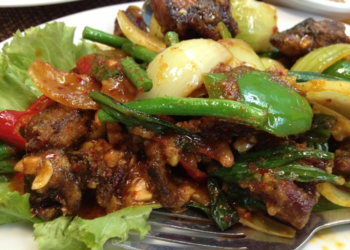
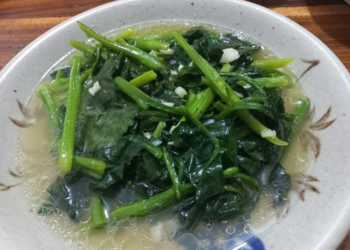
Throughout parts of its range, including nearby regions such as the northern Philippines, Turritella terebra is collected and sold as food, suggesting that similar uses could occur or emerge in other coastal communities. The meat can be consumed after boiling and extraction from the shell, adding to the diversity of small invertebrates available in artisanal fisheries. In Cambodia, screw turrets are rarely eaten, but can be found in some Chinese restaurants.

Chinese-style sautéed Turritella (©Pascal Médeville)

In addition, the elongated shells are marketable curios and sometimes enter the shell trade, either natural or dyed, where they are appreciated for their elegant spiral form. Such aesthetic value may intersect with tourism along Cambodia’s coast, where shells appear in handicrafts, though targeted data specific to Cambodian markets remain limited.

Conservation context

Globally, Turritella terebra is not currently highlighted as a major conservation priority, but local populations can be affected by habitat loss, dredging, and reclamation of soft‑bottom coastal zones. The species has been assessed as vulnerable in localized contexts such as Singapore, where extensive coastal modification drastically reduced suitable habitat.

For Cambodia, increasing coastal development, port expansion, and sediment disturbance could pose similar pressures on soft‑bottom communities that include Turritella terebra. Protecting representative areas of sandy and muddy seabed, controlling pollution, and monitoring benthic invertebrates would help maintain this species and the broader ecological functions it supports along the Cambodian shore.

Don’t miss our upcoming articles!

We don’t spam!

Check your INBOX or SPAM folder to confirm your subscription.

Tags: cambodia marine lifecambodian coastcoastal ecology in Cambodiaindo-pacific gastropodsmolluscs in Cambodiascrew shellsea snails in Cambodiaturritella terebraខ្យងដែកខួងខ្យងស័ង្គ
ShareTweet
Previous Post

Picture of the day: Refined Cantonese Dim Sum in Phnom Penh

Next Post

Blooming Fragments – Patchwork of Memories: Tith Veasna at Check Inn Phnom Penh

Pascal Medeville

Pascal Medeville

Author of the blog Wonders of Cambodia, I share my passion for Cambodia through stories, cultural insights, and personal reflections on the country. I'm also the founder of Simili Consulting, where we provide high-quality, professional translation services to international clients.

Related Posts

Close-up of tarticlette at La Guinguette de Siem Reap, a French-style potato, bacon, onion and raclette cheese gratin served in a black dish with green salad on the side in Siem Reap, Cambodia.
Cuisine

Picture of the day: Tarticlette Comfort at La Guinguette in Siem Reap

June 5, 2026
Rectangular plate of Cambodian rice sautéed with finely chopped garlic, served on a wooden table in a small Kampong Thom street restaurant.
Cuisine

Picture of the day: Kampong Thom Garlic Fried Rice Comfort

June 3, 2026
Cast-iron pan of chakchouka topped with eggs and herbs, served on a wooden board with a basket of sliced baguette and a cup of black coffee at Paris Bakery in Siem Reap.
Cuisine

Picture of the day: Chakchouka Breakfast at Paris Bakery, Siem Reap

June 1, 2026
House-made blood sausage with mashed potatoes, mustard sauce, and greens served on a patterned plate at La Ferme de Bassac restaurant in Siem Reap.
Cuisine

Picture of the day: Blood Sausage & Mash at La Ferme de Bassac Siem Reap

May 30, 2026
Close-up of Cambodian mango sticky rice served in a rustic clay bowl, with a round mound of glossy coconut sticky rice surrounded by golden mango slices like petals and a small jackfruit strip on top.
Cuisine

Picture of the day: Golden Mango Sticky Rice Dessert in Cambodia

May 28, 2026
Close-up of stacked Cambodian fresh spring rolls (kuong) on a patterned blue plate, showing translucent rice paper wrapped around green herbs, pork, and shrimp.
Cuisine

Picture of the day: Fresh Cambodian Kuong, Light Spring Rolls from Phnom Penh

May 26, 2026
Next Post
Blooming Fragments – Patchwork of Memories: Tith Veasna at Check Inn Phnom Penh

Blooming Fragments – Patchwork of Memories: Tith Veasna at Check Inn Phnom Penh

  • Trending
  • Comments
  • Latest
The French Protectorate of Cambodia (1863–1953): An Overview

The French Protectorate of Cambodia (1863–1953): An Overview

July 13, 2025
The Franco-Siamese Treaty of 23 March 1907: Borders, Politics, and the Return of Angkor

The Franco-Siamese Treaty of 23 March 1907: Borders, Politics, and the Return of Angkor

February 11, 2026
Cambodian-Vietnamese War (1978-1989)

Cambodian-Vietnamese War (1978-1989)

July 13, 2025
Working in Cambodia in 2026: Visas, Work Permits and Everyday Reality for Foreigners

Working in Cambodia in 2026: Visas, Work Permits and Everyday Reality for Foreigners

February 9, 2026
Kampot Province

Takeo Province: A Cradle of Cambodian History and Culture

3
Kratié Town on the Mekong: Colonial Echoes, River Life, and Irrawaddy Dolphins

Kratié Town on the Mekong: Colonial Echoes, River Life, and Irrawaddy Dolphins

3
Banteay Meanchey Province: A Gateway to Cambodia’s Rich Heritage

Banteay Meanchey Province: A Gateway to Cambodia’s Rich Heritage

2
Stung Treng Province: The Gateway to Cambodia’s Northern Wilderness

Stung Treng Province: The Gateway to Cambodia’s Northern Wilderness

2
Diagram of Earth surrounded by the eight Moon phases (New, Waxing crescent, First quarter, Waxing gibbous, Full, Waning gibbous, Third quarter, Waning crescent) with clock times around Earth and arrows showing the Moon’s orbit.

Cambodian Lunar Calendar Months – Names, Meanings, and Cultural Significance

June 6, 2026
Close-up of a finely chased Khmer silver pumpkin-shaped betel nut box from Cambodia, with intricate floral and scroll repoussé patterns on a dark wooden surface.

Picture of the day: Silver Pumpkin Betel Box from Cambodia

June 6, 2026
An elderly woman crouches beside a woven basket overflowing with bananas in a sunlit tropical village, while a wide‑eyed rabbit joyfully bounds toward her, banana peels scattered across the ground

Tales of the hare, part 1 – The Clever Rabbit and the Banana Seller

June 5, 2026
Close-up of tarticlette at La Guinguette de Siem Reap, a French-style potato, bacon, onion and raclette cheese gratin served in a black dish with green salad on the side in Siem Reap, Cambodia.

Picture of the day: Tarticlette Comfort at La Guinguette in Siem Reap

June 5, 2026

Recent News

Diagram of Earth surrounded by the eight Moon phases (New, Waxing crescent, First quarter, Waxing gibbous, Full, Waning gibbous, Third quarter, Waning crescent) with clock times around Earth and arrows showing the Moon’s orbit.

Cambodian Lunar Calendar Months – Names, Meanings, and Cultural Significance

June 6, 2026
Close-up of a finely chased Khmer silver pumpkin-shaped betel nut box from Cambodia, with intricate floral and scroll repoussé patterns on a dark wooden surface.

Picture of the day: Silver Pumpkin Betel Box from Cambodia

June 6, 2026
An elderly woman crouches beside a woven basket overflowing with bananas in a sunlit tropical village, while a wide‑eyed rabbit joyfully bounds toward her, banana peels scattered across the ground

Tales of the hare, part 1 – The Clever Rabbit and the Banana Seller

June 5, 2026
Close-up of tarticlette at La Guinguette de Siem Reap, a French-style potato, bacon, onion and raclette cheese gratin served in a black dish with green salad on the side in Siem Reap, Cambodia.

Picture of the day: Tarticlette Comfort at La Guinguette in Siem Reap

June 5, 2026
Wonders of Cambodia

Exploring Culture, Nature, and Spirit in the Land of Wonder.

Follow Us

Browse by Category

  • Architecture
  • Architecture
  • Art
  • Books
  • Business
  • Business
  • Cinema
  • Costume
  • Costume
  • Cuisine
  • Culture
  • Defense
  • Du lịch
  • e-Books
  • Education
  • Expat life
  • Fauna
  • Festival
  • Flora
  • Food providers
  • Français
  • Geography
  • Handicraft
  • Health
  • Histoire
  • History
  • Hotels
  • Khmer Stories
  • Khmer stories
  • Knowledge
  • Language
  • Last posts
  • Lịch sử
  • Life in Cambodia
  • Literature
  • Music
  • Pictures
  • Politics
  • Population
  • Press review
  • Professional services
  • Proverbs
  • Reference
  • Reference
  • Religion
  • Restaurants
  • Textile
  • Tiếng Việt
  • Tourism
  • Tourisme
  • Transport
  • Uncategorized
  • Video
  • Vie quotidienne
  • Who's who
  • ខ្មែរ
  • ទេសចរណ៍៖
  • បគ្គលល្បី
  • ប្រវត្តិសាស្ត្រោ
  • 中文
  • 书籍
  • 历史
  • 旅游
  • 生活

Recent News

Diagram of Earth surrounded by the eight Moon phases (New, Waxing crescent, First quarter, Waxing gibbous, Full, Waning gibbous, Third quarter, Waning crescent) with clock times around Earth and arrows showing the Moon’s orbit.

Cambodian Lunar Calendar Months – Names, Meanings, and Cultural Significance

June 6, 2026
Close-up of a finely chased Khmer silver pumpkin-shaped betel nut box from Cambodia, with intricate floral and scroll repoussé patterns on a dark wooden surface.

Picture of the day: Silver Pumpkin Betel Box from Cambodia

June 6, 2026
  • About Us
  • Advertise
  • Privacy & Policy
  • Contact Us

© 2025 - Made with 💫 by TechFlow.

No Result
View All Result
  • Home
  • Culture
  • Cuisine
  • Tourism
  • Business
  • Life in Cambodia
  • 中文
  • ខ្មែរ
  • Français
  • Tiếng Việt
  • e-Books

© 2025 - Made with 💫 by TechFlow.