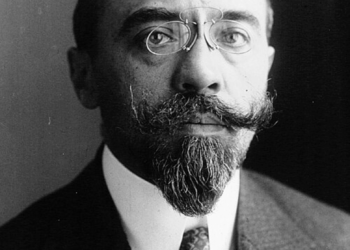

Louis Delaporte (1842–1925) was a French naval officer, explorer, draftsman, and passionate advocate for Khmer art. As one of the earliest Europeans to systematically study and document the ruins of Angkor and other ancient Cambodian monuments, Delaporte played a crucial role in bringing the grandeur of Khmer civilization to European consciousness during the 19th century. His contributions to art history, archaeology, and museology were profound, and his legacy continues to shape the way the world perceives the cultural heritage of Cambodia.
Early Life and Career
Louis Delaporte was born on January 11, 1842, in Loches, a small town in central France. He joined the French Navy at a young age and later became a hydrographic engineer. His technical training and artistic talents made him an ideal candidate for the expeditions France began organizing during the colonial expansion of the 19th century. Delaporte’s early naval career included travels to Mexico and Asia, where he developed a deep appreciation for non-Western cultures and their artistic expressions.
In 1866, Delaporte was appointed as part of a major scientific mission to Southeast Asia — the Mekong Exploration Mission — organized by the French government. The mission’s goal was to explore the Mekong River to assess its navigability and to open trade routes for the French colonial empire. While the expedition ultimately revealed that the Mekong was not suitable as a major commercial artery, it had a lasting impact for other reasons — chief among them, the rediscovery of Angkor Wat and other monumental Khmer sites by European explorers, including Delaporte.
The Mekong Expedition and Discovery of Angkor
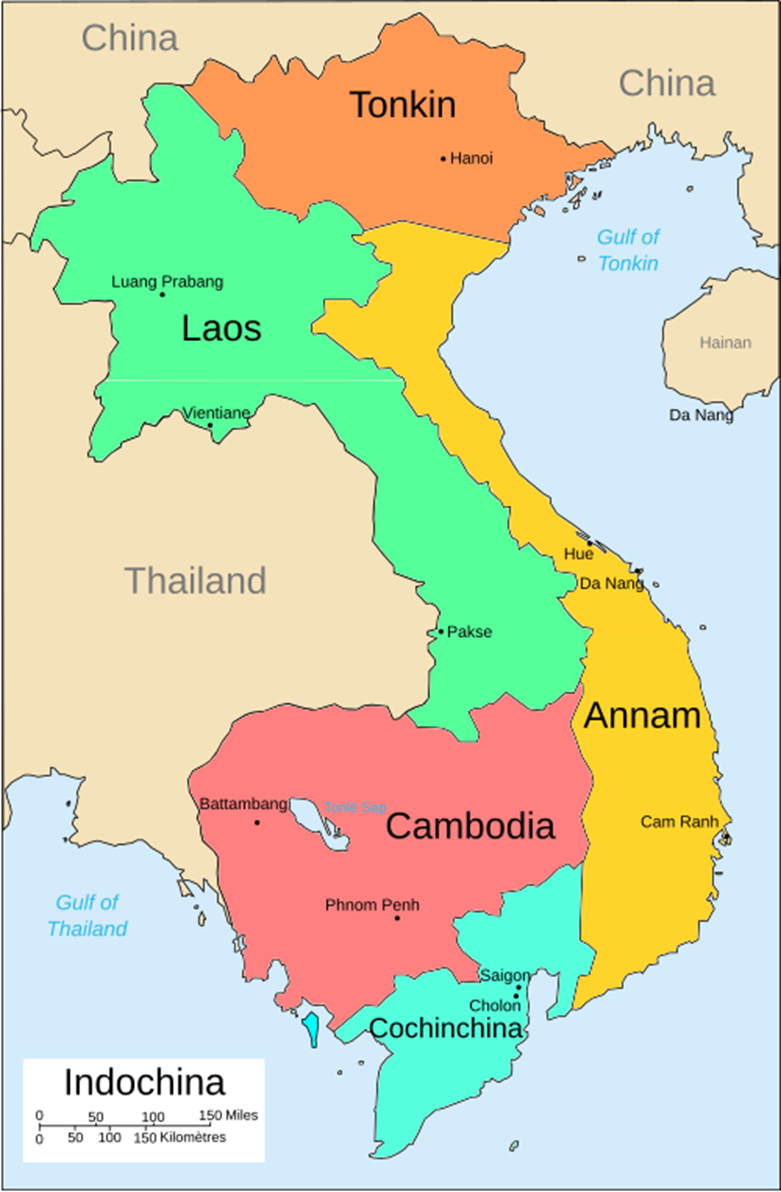
Delaporte joined the Mekong expedition under the leadership of Captain Ernest Doudart de Lagrée and later Lieutenant Francis Garnier. The mission, which lasted from 1866 to 1868, took the team from southern Vietnam up the Mekong River through Cambodia, Laos, and into China. During the early phase of the expedition, the group visited the ruins of Angkor, an ancient Khmer city near the town of Siem Reap, largely unknown to the Western world at that time.
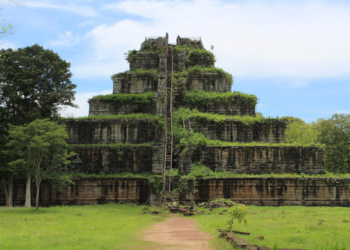
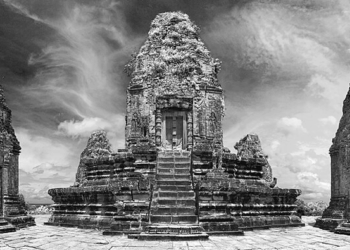
Delaporte was deeply struck by the scale, intricacy, and aesthetic refinement of the ruins. He called Angkor “one of the most admirable works that the hand of man has ever created.” As an artist and draftsman, he immediately began producing detailed drawings and sketches of the temples, sculptures, and reliefs. His visual records, later supplemented with photographs, were among the first accurate depictions of Khmer art to reach France.
While others in the expedition viewed Angkor with a mixture of awe and pragmatic interest, Delaporte perceived it through the lens of an artist and historian. He recognized in the temples of Angkor a cultural achievement on par with ancient Egypt, Greece, or Rome — an idea radical at the time, when non-European civilizations were often considered inferior in artistic merit.
“Mission Civilisatrice” and Cultural Transfer
Delaporte returned to France determined to share the majesty of Khmer civilization with the French public. He published illustrations and accounts of the ruins and began organizing exhibitions. One of his major goals was to construct a museum collection of Khmer art in France to promote appreciation and scholarly study.
In 1873, he returned to Cambodia on a second expedition, this time under the patronage of the French Ministry of Public Instruction. His mission was to collect Khmer sculptures, architectural fragments, and other artifacts that could be brought back to France for display. At the time, Cambodia was not yet controlled by the French (the country became a protectorate in 1863, but with limited French control), and Delaporte operated with relatively little oversight or opposition. However, the ethics of his actions — removing cultural treasures from their original context — remain controversial today.
Delaporte shipped dozens of crates filled with sculptures, lintels, bas-reliefs, and moldings to France. Many of these were placed in the Musée de l’Indochine (Museum of Indochina), which later contributed to the collection of the Musée Guimet in Paris. The exhibition of Khmer art in France was a revelation to many Europeans. Delaporte’s installations were meant not just as displays of exotic artifacts, but as educational spaces showing the sophistication and grandeur of Southeast Asian civilization.
The Cambodian Pavilion and the 1878 Universal Exposition
One of Delaporte’s crowning achievements was the creation of a Khmer-style pavilion at the Exposition Universelle of 1878 in Paris. This World’s Fair, held on the Champ de Mars, was designed to showcase technological and artistic achievements from around the world. Delaporte oversaw the construction of a life-sized reproduction of part of Angkor Wat, including sculptures and architectural elements based on his sketches and original Khmer pieces.
The Cambodian Pavilion was a major attraction at the exposition and had a lasting impact on European perceptions of Asian art. For many visitors, this was their first encounter with Khmer culture. The exhibit helped to shift the prevailing narrative about Asia — from one of colonial exoticism and primitivism to one that acknowledged intellectual and artistic parity with the West.
Publications and Scholarship
Delaporte was also a prolific writer. His most important book, Voyage au Cambodge : L’architecture khmer (published in 1880), was richly illustrated and included historical commentary, technical analyses of the architecture, and his reflections on Khmer aesthetics. In this work, he famously argued that the art of Cambodia should be appreciated on its own terms and not merely as a derivative of Indian or Chinese models.
His writing combined personal observations with archaeological detail, making it accessible to both scholars and general readers. Delaporte’s tone often bordered on reverent, portraying Angkor as a lost paradise of art and spirituality. His romanticism appealed to the European public’s imagination and fit within the broader framework of Orientalist literature of the time.
Legacy and Controversy
Delaporte’s efforts significantly contributed to the popularization of Khmer art in the West and laid the groundwork for future archaeological and conservation efforts. His collections formed the nucleus of France’s Khmer art holdings, now largely housed at the Musée Guimet.
However, his work also raises ethical questions. The removal of cultural artifacts from Cambodia to France is now often seen as part of a broader colonial appropriation of heritage. While Delaporte acted with scholarly intent and deep admiration for Khmer culture, his actions — like those of many 19th-century explorers — contributed to the loss of cultural patrimony in the colonized world.
In recent decades, there has been increasing dialogue around restitution and repatriation of cultural artifacts. Some of the items Delaporte brought to France remain focal points in these discussions. Cambodian authorities have requested the return of numerous pieces housed in European and American institutions, and conversations about cultural heritage continue to evolve.
Influence on French Colonial Policy
Delaporte’s romantic but scholarly promotion of Khmer art had a broader political impact. His work helped justify and reinforce France’s colonial presence in Indochina under the guise of “mission civilisatrice” — the civilizing mission. By framing Cambodia as a land of lost grandeur that could be “rediscovered” and preserved under French stewardship, Delaporte provided cultural and intellectual support for colonial policies.
This narrative positioned France not only as a political and military power, but also as a guardian of global heritage. Delaporte himself may not have explicitly supported colonial domination, but his work was undoubtedly used to bolster imperial ambitions.
Later Life and Recognition
Louis Delaporte continued to work as a curator, writer, and lecturer until his death in 1925. He never lost his passion for Khmer art and remained an advocate for its preservation and appreciation.
Today, his legacy is recognized in both France and Cambodia. Streets and institutions have been named after him, and his drawings and collections continue to be used by scholars, architects, and historians studying Southeast Asian art. His detailed records of temples — many of which have since deteriorated — remain invaluable for restoration and research efforts.
In 2013, a traveling exhibition titled “Angkor: Birth of a Myth – Louis Delaporte and Cambodia” was mounted in Paris and Phnom Penh to reassess Delaporte’s impact. The exhibition brought renewed attention to his contributions while also confronting the colonial context in which he worked.
Louis Delaporte was a visionary figure who dedicated much of his life to the study and promotion of Khmer art. His pioneering expeditions, meticulous documentation, and curatorial efforts introduced the world to the splendors of Angkor and reshaped Western understanding of Southeast Asian civilization. At the same time, his work is inseparable from the colonial dynamics of his era, raising important questions about cultural ownership and historical memory.
Despite these complexities, Delaporte’s passion for Khmer architecture and sculpture opened new pathways in art history and cross-cultural appreciation. His legacy endures not just in museums and books, but in the ongoing efforts to preserve and honor Cambodia’s remarkable cultural heritage.