
Chha Kdaw (ឆាក្ដៅ), directly translated as “hot stir-fry” in Khmer, is more than just a cooking technique — it is an essential part of Cambodia’s culinary soul. Found in households, street stalls, and restaurants throughout the country, Chha Kdaw represents a fiery, aromatic, and flavorful way to prepare food using high heat, quick cooking, and bold ingredients.
In Cambodian, the word “Chha” means “to stir-fry” or “to sauté,” while “Kdaw” means “hot.” Together, Chha Kdaw refers to stir-frying ingredients over high heat, typically in a wok, often with a small amount of oil. This method sears meats quickly, sealing in flavors and giving the food a slightly smoky, caramelized finish. The result is a dish that bursts with flavor, heat, and depth.
Origins and Cultural Context
Stir-frying is believed to have originated in Chinese cuisine, and through centuries of trade and migration, the technique found its way into Southeast Asian kitchens — including Cambodia’s. Over time, Khmer cooks adapted stir-fry techniques to suit local tastes, ingredients, and traditions. Chha Kdaw is one such adaptation, rooted in Cambodian culinary heritage but influenced by regional practices.
In Cambodian homes, Chha Kdaw is commonly used to prepare everyday meals. It’s a versatile technique suitable for a wide range of ingredients — meats, seafood, tofu… The quick cooking process makes it ideal for preserving the freshness and texture of ingredients, especially in a tropical climate where food spoils quickly.
Key Ingredients in Chha Kdaw Dishes
The magic of Chha Kdaw lies in its simplicity and the balance of ingredients. A typical Chha Kdaw dish might include the following components:
* Protein: Common proteins include pork, beef, chicken, shrimp, or fish. In rural areas, more traditional meats like frog or eel might be used. Tofu or eggs are great vegetarian alternatives.
* Aromatics: Garlic, shallots, lemongrass, galangal, and ginger are central to the flavor base. Very often, kaffir lime leaves or holy basil are added to enhance the aroma.
* Sauces and Seasonings: The typical seasoning combination includes fish sauce, oyster sauce, soy sauce, palm sugar, and black pepper. Chili is often used to create heat: Chha Kdaw dishes are usually spicy.
* Oil: A small amount of oil is heated to a high temperature — traditionally in a wok — to begin the cooking process.
Technique and Cooking Process
The cooking technique behind Chha Kdaw is fast and requires attentiveness. It generally follows these steps:
1. Preparation: All ingredients must be chopped, sliced, and measured before cooking begins. The process moves quickly, and pausing to prep during cooking can lead to overcooking or burning.
2. High Heat Cooking: The wok or pan is heated until very hot, then oil is added. Aromatics like garlic and shallots are stir-fried briefly to release their flavor.
3. Searing the Protein: The chosen protein is added and stir-fried over high heat. This sears the surface, locking in juices and flavor.
4. Seasoning and Sauce: Sauces and spices are added near the end, ensuring they coat the ingredients evenly without being burned.
5. Final Toss: Everything is tossed together rapidly so that all ingredients are cooked evenly and coated in flavor.
Popular Variations of Chha Kdaw
There is no one single version of Chha Kdaw. Instead, the term refers to a style of cooking that can be adapted to many dishes. Some popular versions include:
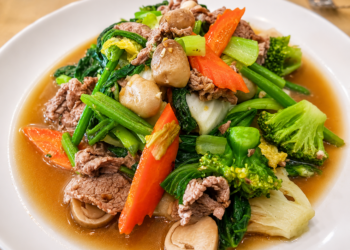
* Chha Kdaw Sach Ko (Hot Stir-Fried Beef): Thin slices of beef stir-fried with basil, garlic, holy basil… seasoned with soy sauce and oyster sauce.
* Chha Kdaw Sach Moan (Spicy Stir-Fried Chicken): Chicken with chili, kaffir lime, lemongrass…, often served with steamed rice.
Each version is slightly different depending on the region, the available ingredients, and the personal taste of the cook. Some families may use more sugar for a caramelized flavor, while others prefer more chili and garlic for heat.
Chha Kdaw in Modern Cambodian Cuisine
In modern Cambodian cities like Phnom Penh or Siem Reap, Chha Kdaw dishes are served everywhere — from humble roadside stalls to high-end Khmer fusion restaurants. They are a favorite at lunch or dinner and are often eaten with white rice.
You’ll also find Chha Kdaw adapted in restaurant menus to suit foreign visitors, with milder spices or vegetarian options. Street food vendors often cook Chha Kdaw dishes to order, allowing customers to choose their preferred ingredients and spice levels.
Health and Nutrition
One of the benefits of Chha Kdaw is that it’s relatively healthy compared to deep-fried or heavily processed dishes. Because it uses minimal oil and relies on fresh ingredients, it retains the nutrients and textures of the food. The high-heat technique also means that food cooks quickly, reducing the loss of vitamins from overcooking.
For health-conscious diners, it’s easy to adapt Chha Kdaw by reducing oil and salt, and adding plant-based proteins.
Chha Kdaw is a cornerstone of Cambodian cuisine — vibrant, fast, and full of flavor. It embodies the Cambodian approach to food: using fresh, local ingredients and balancing sweet, salty, sour, and spicy elements in perfect harmony.
Whether enjoyed in a rural village or a city restaurant, Chha Kdaw offers a delicious glimpse into the daily life and culinary traditions of Cambodia. It’s not just food — it’s a cultural expression cooked in fire, flavor, and passion.