Wonders of Cambodia
  • Home
  • Culture
  • Cuisine
  • Tourism
  • Business
  • Life in Cambodia
  • 中文
  • ខ្មែរ
  • Français
  • Tiếng Việt
  • e-Books
No Result
View All Result
  • Home
  • Culture
  • Cuisine
  • Tourism
  • Business
  • Life in Cambodia
  • 中文
  • ខ្មែរ
  • Français
  • Tiếng Việt
  • e-Books
No Result
View All Result
Wonders of Cambodia
No Result
View All Result
Home Cuisine

Averrhoa bilimbi (Bilimbi): A Sharp Little Fruit with Big Culinary Potential

Pascal Medeville by Pascal Medeville
April 22, 2026
in Cuisine, Flora
Reading Time: 7 mins read
0

Often overshadowed by its sweeter cousin, starfruit, bilimbi (Averrhoa bilimbi) is a strikingly sour tropical fruit widely used across Southeast Asia. This article offers a clear botanical overview and explores its many food uses – from traditional preserves to savory dishes – making it a valuable ingredient for adventurous cooks and curious readers alike.

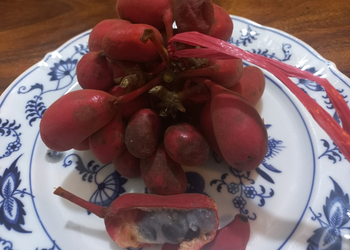
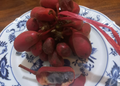
Bilimbi on a plate (©Pascal Médeville)

Introduction

If you have spent any time in Cambodia, Malaysia, or Indonesia, you may have noticed clusters of small, cucumber-shaped green fruits growing directly on tree trunks. This is bilimbi, scientifically known as Averrhoa bilimbi (Khmer: ទ្រលឹងទឹង tro-leung teung), a fruit that rarely wins popularity contests for sweetness – but excels in the kitchen.

This article is for curious cooks, gardeners, and anyone interested in tropical food plants. You will find a simple botanical description of bilimbi, followed by practical insights into its culinary uses. Whether you want to pickle it, cook it, or simply understand it better, bilimbi rewards those willing to embrace its acidity.

Botanical Description of Averrhoa bilimbi

A Tree That Bears Fruit on Its Trunk

Averrhoa bilimbi belongs to the Oxalidaceae family, the same as starfruit (Averrhoa carambola). Native to Southeast Asia, it is now widely cultivated in tropical regions.

The tree itself is relatively small, usually reaching 5 to 10 meters in height. Its most distinctive feature is cauliflory – the habit of producing flowers and fruits directly on the trunk and main branches rather than at the tips.

Fruits on the tree (©Pascal Médeville)

Leaves, Flowers, and Fruits

  • Leaves: Compound, arranged alternately, and resembling those of certain leguminous trees. They fold slightly at night, a charming botanical detail.
  • Flowers: Small, reddish-purple, and fragrant, appearing in clusters along the trunk.
  • Fruits: Cylindrical, smooth, and thin-skinned, typically 4 to 10 cm long. They start bright green and may turn yellowish when fully ripe.

The flesh is juicy and extremely acidic. Think lemon – but without the balancing sugar. Or, more precisely, think of something that makes lemon seem polite.

Growing Conditions

Bilimbi thrives in hot, humid climates with well-drained soil. It tolerates heavy rainfall and is often found in home gardens rather than large-scale plantations. The tree is hardy and productive, sometimes producing several crops per year.

Food Uses of Bilimbi

A Natural Sour Agent

In Southeast Asian cooking, bilimbi is primarily valued as a souring ingredient. Where Western kitchens reach for lemon or vinegar, local cuisines often turn to bilimbi.

In Cambodia, it may appear in soups and stews, adding a clean, sharp acidity that cuts through rich flavors. In Indonesia and Malaysia, it is commonly used in dishes such as:

  • Sambal bilimbi: A spicy condiment combining chilies, salt, and crushed bilimbi.
  • Fish curries: Where bilimbi balances the richness of coconut milk.
  • Asam-based dishes: Sour soups or sauces where bilimbi replaces tamarind.

Pickles and Preserves

Because of its intense acidity, bilimbi lends itself naturally to preservation.

Salted Bilimbi

One traditional method is simple salting:

  • Fruits are washed, lightly crushed, and layered with salt.
  • After several days, they soften and develop a complex, savory-sour profile.

These salted bilimbi are used as condiments or flavor enhancers.

Sweet Preserves

To tame its sharpness, bilimbi can also be cooked with sugar:

  • Simmered into jams or chutneys.
  • Candied and dried, resulting in a tangy-sweet snack.

The transformation is quite dramatic: what begins as aggressively sour becomes pleasantly tart, almost addictive.

Ma Bohème, kalamansi bilimbi jam from La Cuisine d’Aline (©Aline Ang)

Fresh Use (with Caution)

Eating bilimbi raw is possible – but not for the faint-hearted. Its high oxalic acid content makes it intensely sour and potentially irritating in large quantities.

That said, thin slices can be used sparingly:

  • In salads for a citrus-like punch.
  • As a garnish for grilled meats or seafood.

A practical example: a few slices of fresh bilimbi in a green mango salad can elevate the entire dish, adding brightness without needing lime juice.

Juice and Fermented Products

Bilimbi juice is sometimes used as:

  • A base for refreshing drinks (usually heavily sweetened).
  • A fermentation ingredient in local beverages or vinegars.

In some regions, it is even used for non-culinary purposes such as cleaning metal due to its acidity – though that is perhaps not the most appetizing selling point.

Practical Tips for Using Bilimbi

Balancing the Acidity

The key to cooking with bilimbi is balance:

  • Pair it with fatty or rich ingredients (coconut milk, fish, pork).
  • Combine it with sugar or palm sugar to soften the sharpness.
  • Use it sparingly at first – its flavor can dominate quickly.

Storage and Handling

  • Fresh bilimbi does not store well for long; it is best used within a few days.
  • Refrigeration helps extend its life slightly.
  • For longer storage, salting or preserving is highly recommended.

Substitutes

If bilimbi is unavailable:

  • Green tamarind offers a similar sour profile, though less sharp.
  • Lime or lemon can work in a pinch, but they lack bilimbi’s depth and vegetal notes.

Conclusion

Averrhoa bilimbi may not win hearts with sweetness, but it earns its place through versatility and intensity. From soups to preserves, it plays a subtle yet essential role in Southeast Asian cuisine. Once understood, this modest fruit becomes less of a curiosity – and more of a culinary tool worth mastering.

About the author

Pascal Médeville is a writer and digital publisher based in Cambodia, where he explores local culture, food traditions, and plant life. Through his work on Wonders of Cambodia, he documents lesser-known ingredients like bilimbi, blending practical knowledge with historical and culinary insight.

Don’t miss our upcoming articles!

We don’t spam!

Check your INBOX or SPAM folder to confirm your subscription.

Tags: Averrhoa bilimbibilimbiCambodian cuisineedible plants Asiasour fruitsSoutheast Asian ingredientstraditional food usestropical fruits Cambodiaទ្រលឹងទឹង
ShareTweet
Previous Post

Picture of the day: Sternocera aequisignata, Jewel Beetle of Kratie

Next Post

Picture of the day: King Oyster Mushroom with Pork: Cambodian Home Comfort

Pascal Medeville

Pascal Medeville

Author of the blog Wonders of Cambodia, I share my passion for Cambodia through stories, cultural insights, and personal reflections on the country. I'm also the founder of Simili Consulting, where we provide high-quality, professional translation services to international clients.

Related Posts

Close-up of a black bowl filled with clear Cambodian alocasia stem soup, showing pale green stems, herbs, and tiny pieces of fish in a light broth on a wooden table.
Cuisine

Picture of the day: Alocasia Stem Soup with Tiny Fish Comfort

June 9, 2026
Close-up of a Cambodian meal featuring sliced boiled beef tripe on a floral plate, served with a bowl of prahok fermented fish dipping sauce topped with red chilies and a separate plate of fresh green herbs and vegetables on a wooden table.
Cuisine

Picture of the day: Beef Tripe with Fermented Fish Dip – A Rustic Cambodian Feast

June 7, 2026
Close-up of tarticlette at La Guinguette de Siem Reap, a French-style potato, bacon, onion and raclette cheese gratin served in a black dish with green salad on the side in Siem Reap, Cambodia.
Cuisine

Picture of the day: Tarticlette Comfort at La Guinguette in Siem Reap

June 5, 2026
Rectangular plate of Cambodian rice sautéed with finely chopped garlic, served on a wooden table in a small Kampong Thom street restaurant.
Cuisine

Picture of the day: Kampong Thom Garlic Fried Rice Comfort

June 3, 2026
Cast-iron pan of chakchouka topped with eggs and herbs, served on a wooden board with a basket of sliced baguette and a cup of black coffee at Paris Bakery in Siem Reap.
Cuisine

Picture of the day: Chakchouka Breakfast at Paris Bakery, Siem Reap

June 1, 2026
Close-up of pale cream and pink Pithecellobium dulce (âmpil tœk) flowers blooming on a leafy branch in rural Cambodia, softly blurred green background.
Flora

Picture of the day: Manila Tamarind Blossom in Cambodia

May 31, 2026
Next Post
Close-up of Cambodian-style king oyster mushroom (ផ្សិតភ្លៅមាន់) sautéed with sliced pork on a white plate, garnished with fresh coriander, showing glossy, caramelized edges.

Picture of the day: King Oyster Mushroom with Pork: Cambodian Home Comfort

  • Trending
  • Comments
  • Latest
The French Protectorate of Cambodia (1863–1953): An Overview

The French Protectorate of Cambodia (1863–1953): An Overview

July 13, 2025
The Franco-Siamese Treaty of 23 March 1907: Borders, Politics, and the Return of Angkor

The Franco-Siamese Treaty of 23 March 1907: Borders, Politics, and the Return of Angkor

February 11, 2026
Cambodian-Vietnamese War (1978-1989)

Cambodian-Vietnamese War (1978-1989)

July 13, 2025
Working in Cambodia in 2026: Visas, Work Permits and Everyday Reality for Foreigners

Working in Cambodia in 2026: Visas, Work Permits and Everyday Reality for Foreigners

February 9, 2026
Kampot Province

Takeo Province: A Cradle of Cambodian History and Culture

3
Kratié Town on the Mekong: Colonial Echoes, River Life, and Irrawaddy Dolphins

Kratié Town on the Mekong: Colonial Echoes, River Life, and Irrawaddy Dolphins

3
Banteay Meanchey Province: A Gateway to Cambodia’s Rich Heritage

Banteay Meanchey Province: A Gateway to Cambodia’s Rich Heritage

2
Stung Treng Province: The Gateway to Cambodia’s Northern Wilderness

Stung Treng Province: The Gateway to Cambodia’s Northern Wilderness

2
Close-up of a black bowl filled with clear Cambodian alocasia stem soup, showing pale green stems, herbs, and tiny pieces of fish in a light broth on a wooden table.

Picture of the day: Alocasia Stem Soup with Tiny Fish Comfort

June 9, 2026
Black‑and‑white studio portrait of Albert Sarraut in 1914, shown from the chest up in a dark suit, white shirt and patterned tie, facing the camera against a plain, dark background.

Who’s Who: Albert Sarraut, The Governor-General Who Wanted to “Modernize” Indochina

June 8, 2026
Stormy evening sky over Kampong Thom, Cambodia, with dark monsoon clouds drifting across a blue twilight background above village rooftops.

Picture of the day: Stormy Evening Sky over Kampong Thom

June 8, 2026
Cast-iron pan of chakchouka topped with eggs and herbs, served on a wooden board with a basket of sliced baguette and a cup of black coffee at Paris Bakery in Siem Reap.

Wonders of Cambodia – Pictures of the Week: Comfort, Craft and Memory (June 1st~June 7th, 2026)

June 8, 2026

Recent News

Close-up of a black bowl filled with clear Cambodian alocasia stem soup, showing pale green stems, herbs, and tiny pieces of fish in a light broth on a wooden table.

Picture of the day: Alocasia Stem Soup with Tiny Fish Comfort

June 9, 2026
Black‑and‑white studio portrait of Albert Sarraut in 1914, shown from the chest up in a dark suit, white shirt and patterned tie, facing the camera against a plain, dark background.

Who’s Who: Albert Sarraut, The Governor-General Who Wanted to “Modernize” Indochina

June 8, 2026
Stormy evening sky over Kampong Thom, Cambodia, with dark monsoon clouds drifting across a blue twilight background above village rooftops.

Picture of the day: Stormy Evening Sky over Kampong Thom

June 8, 2026
Cast-iron pan of chakchouka topped with eggs and herbs, served on a wooden board with a basket of sliced baguette and a cup of black coffee at Paris Bakery in Siem Reap.

Wonders of Cambodia – Pictures of the Week: Comfort, Craft and Memory (June 1st~June 7th, 2026)

June 8, 2026
Wonders of Cambodia

Exploring Culture, Nature, and Spirit in the Land of Wonder.

Follow Us

Browse by Category

  • Architecture
  • Architecture
  • Art
  • Books
  • Business
  • Business
  • Cinema
  • Costume
  • Costume
  • Cuisine
  • Culture
  • Defense
  • Du lịch
  • e-Books
  • Education
  • Expat life
  • Fauna
  • Festival
  • Flora
  • Food providers
  • Français
  • Geography
  • Handicraft
  • Health
  • Histoire
  • History
  • Hotels
  • Khmer Stories
  • Khmer stories
  • Knowledge
  • Language
  • Last posts
  • Lịch sử
  • Life in Cambodia
  • Literature
  • Music
  • Pictures
  • Politics
  • Population
  • Press review
  • Professional services
  • Proverbs
  • Reference
  • Reference
  • Religion
  • Restaurants
  • Textile
  • Tiếng Việt
  • Tourism
  • Tourisme
  • Transport
  • Uncategorized
  • Video
  • Vie quotidienne
  • Who's who
  • ខ្មែរ
  • ទេសចរណ៍៖
  • បគ្គលល្បី
  • ប្រវត្តិសាស្ត្រោ
  • 中文
  • 书籍
  • 历史
  • 旅游
  • 生活

Recent News

Close-up of a black bowl filled with clear Cambodian alocasia stem soup, showing pale green stems, herbs, and tiny pieces of fish in a light broth on a wooden table.

Picture of the day: Alocasia Stem Soup with Tiny Fish Comfort

June 9, 2026
Black‑and‑white studio portrait of Albert Sarraut in 1914, shown from the chest up in a dark suit, white shirt and patterned tie, facing the camera against a plain, dark background.

Who’s Who: Albert Sarraut, The Governor-General Who Wanted to “Modernize” Indochina

June 8, 2026
  • About Us
  • Advertise
  • Privacy & Policy
  • Contact Us

© 2025 - Made with 💫 by TechFlow.

No Result
View All Result
  • Home
  • Culture
  • Cuisine
  • Tourism
  • Business
  • Life in Cambodia
  • 中文
  • ខ្មែរ
  • Français
  • Tiếng Việt
  • e-Books

© 2025 - Made with 💫 by TechFlow.