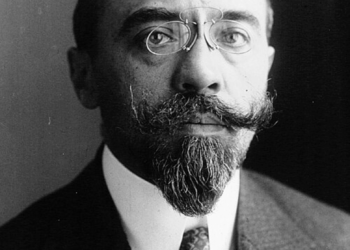

Étienne François Aymonier (26 February 1844 – 21 January 1929) was a multifaceted French figure—soldier, linguist, explorer, epigrapher, archaeologist, and colonial administrator—whose pioneering work in Indochina shaped our understanding of Khmer and Cham civilizations. This post delves into his life, career, scholarly contributions and lasting legacy.
1. Early life and military career
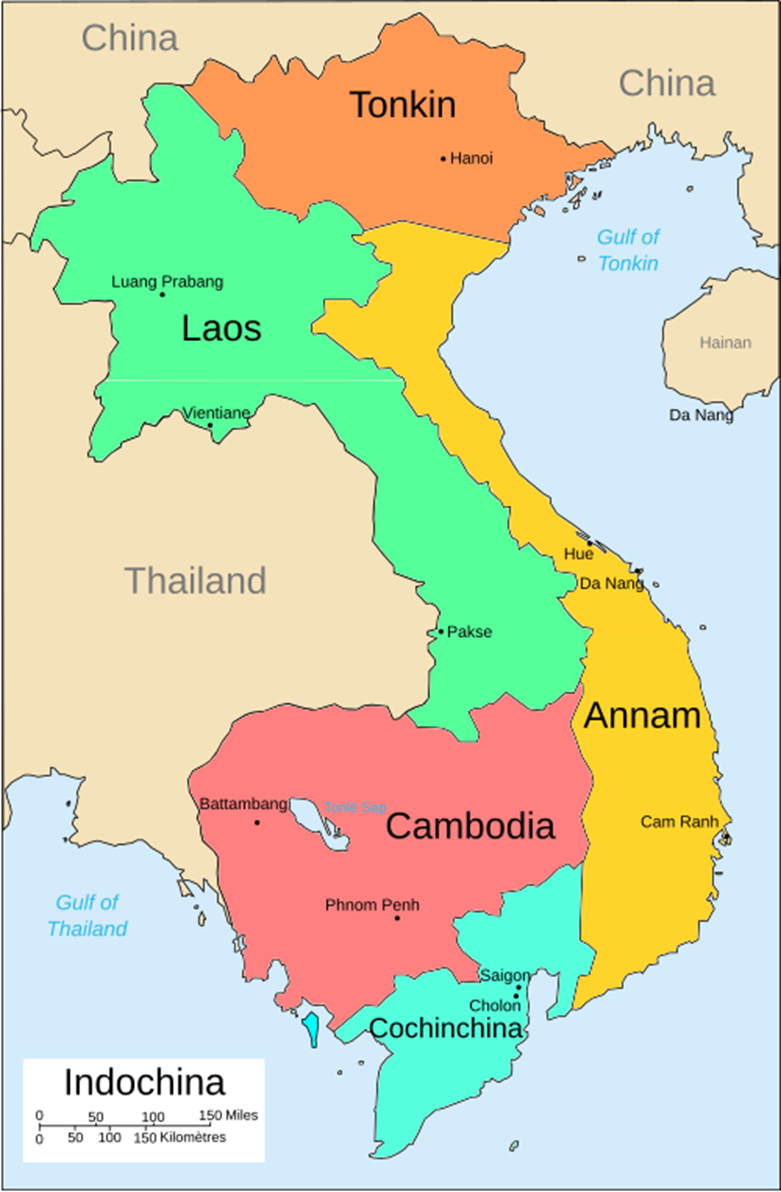
Born into a modest farming and shepherding family in Le Châtelard, Savoie (then part of the Kingdom of Sardinia, now France), Aymonier displayed early intellectual promise. After earning his baccalauréat, he entered the Saint‑Cyr military academy in 1866, graduating as a Marine infantry officer in 1868. He was deployed to Cochinchina in October 1869, marking the start of his lifelong engagement with Southeast Asia.
In Saigon, he immersed himself in local culture and languages. Recognizing his aptitude, his superiors reassigned him in 1870 as Inspector of Indigenous Affairs—a position that honed his linguistic skills and deepened his interest in Khmer communities settled in southern Vietnam.
2. Khmer studies and administrative ascendancy
By 1873, Aymonier had become deputy to Jean Moura, the French representative in the Cambodian Protectorate. Learning Khmer fluently, he began teaching at Saigon’s administrative college in 1874 and authored key linguistic works: a Khmer‑French vocabulary and, by 1878, a full dictionary and text primer.
In 1878, he became director of that college. From 1879 to 1881, he served as acting French representative in Cambodia, affording him extensive freedom to explore the country, collect inscriptions, and deepen his archaeological and epigraphic pursuits.
3. Pioneer of epigraphy and archaeology
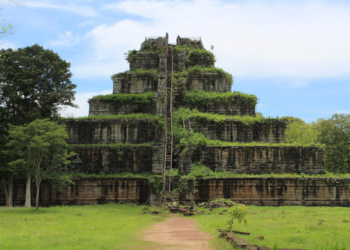
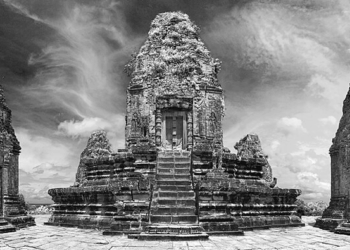
Aymonier’s true legacy lies in how he transformed epigraphy and archaeology in Indochina. Between 1882 and 1885, he led three major expeditions across Cambodia, Siam (modern Thailand), Laos, and southern Vietnam to meticulously document ancient Khmer and Cham ruins, inscriptions, and statuary.
He developed an innovative “estampage” method—creating rubbings of stone inscriptions—that allowed for accurate copying of inscriptions. He trained local assistants to take compass bearings, record itineraries with stopwatches, and perform field epigraphy. This rigorous method helped establish a scientific foundation for Khmer chronologies and the understanding of Champa culture.
He pioneered documenting Cham civilization, previously almost unknown outside Southeast Asia. Drawing on his assistants’ local knowledge, he published foundational studies on the Cham language, religion, and historical legends. His works such as Grammaire de la langue chame (1889) and Dictionnaire cham‑français helped immortalize that culture in academic discourse.
4. Translator and collector
Aymonier’s productive output included numerous publications. Early among these were the Vocabulaire cambodgien-français (1874), Textes khmers (1878), and Quelques notions sur les inscriptions en vieux khmêr (1883). Later works included L’Épigraphie kambodjienne (1885).
His three‑volume synthesis Le Cambodge (1900–1904) remains his magnum opus. It combined archaeological field data, inscriptions, geography, detailed studies of Angkor and cultural history, and plans and maps of ruins. Scholars continue to see it as a foundational reference.
Aymonier also collected Khmer sculptures and stelae, many of which he brought back to France, later housed at the Musée Guimet. He deposited rubbings of inscriptions at the Bibliothèque nationale and the Société asiatique. An entire rotunda at Guimet was later filled largely from his collection.
5. Administrative roles and institutional influence
After a stint as French delegate from Annam‑Tonkin to the Exposition universelle (1889), Aymonier returned to Paris to head the newly created École coloniale, where he also taught Khmer until retiring in 1905.
He played an influential role in founding the École française d’Extrême‑Orient (EFEO) in 1899, which later took responsibility for conserving Angkor in 1908. He served on the Conseil supérieur des colonies from 1910 and maintained ties with the Alliance française, Société asiatique, and Musée Guimet.
6. Critiques and controversies
Despite his achievements, Aymonier had detractors among scholars. Critics pointed to his “self-taught” methods and occasional translational or analytical inaccuracies. His leadership style—described by some as brusque—created friction within academic and colonial hierarchies. Notably, the renowned sinologist Paul Pelliot criticized his solo-driven scientific approach.
Nonetheless, prominent figures such as George Cœdès later recognized the enduring significance of Aymonier’s field work: “his mission of 1882–1885 … founded Khmer epigraphy on a solid base and resuscitated the Chams ignored before him”.
7. Legacy and recognition
Aymonier passed away in Paris in January 1929 at the age of 84. Although some of his analyses have been revised over time, the substance of his empirical contributions remains invaluable for Southeast Asian studies.
The fish species Gyrinocheilus aymonieri (Siamese algae eater) was named in his honor. Numerous institutions acknowledge his legacy. The Musée Guimet continues to display his collected Khmer masterpieces, EFEO and other scholarly bodies still refer to his documentation, and Cham communities remember his partnership and cultural advocacy.
8. Conclusion: an enduring field orientalism
Étienne Aymonier exemplified what has been called “field” Orientalism—deeply engaged, ground‑level exploration rather than armchair academic theorizing. His systematic surveys, inscription copying techniques, and archaeological foresight laid the bedrock for modern Southeast Asian history, epigraphy, linguistics, and archaeology. While not without flaws, his work dramatically reshaped European awareness of Khmer and Cham civilizations, and institutionalized their study in France. Over a century later, his name still resonates in scholarly circles, museums, and even biology.
Selected works
Vocabulaire cambodgien‑français (Saigon, 1874)
Dictionnaire khmêr‑français and Textes khmers (Saigon, 1878)
Quelques notions sur les inscriptions en vieux khmêr (1883);
L’Épigraphie kambodjienne (1885)
Grammaire de la langue chame (1889)
Dictionnaire cham‑français (1906)
Le Cambodge, 3 vols. (Paris, 1900–1904)
The excellent Angkor Database has a more complete list of Aymonier’s publications, et gives in-depth information about this pioneer of Khmer studies. It also gives direct access to some of his publications.
In short, Étienne Aymonier’s pioneering blend of linguistic mastery, archaeological ingenuity, and colonial service helped to illuminate lost civilizations and lay the foundations of modern Indochinese scholarship. His life and work remain a testament to the power of immersive, respectful, and meticulously documented cultural exploration.