The Independence Monument, known in Khmer as វិមានឯករាជ្យ (Vimean Ekareach), stands as the proud sentinel of Cambodian nationhood in the heart of Phnom Penh. Constructed in 1958 and inaugurated in 1962, this landmark memorializes the hard-won independence achieved by Cambodia after nearly nine decades under French colonial rule. Serving as both a historical monument and an active site for national ceremonies, it has emerged as an enduring focal point for collective memory, architectural admiration, and patriotic celebration.

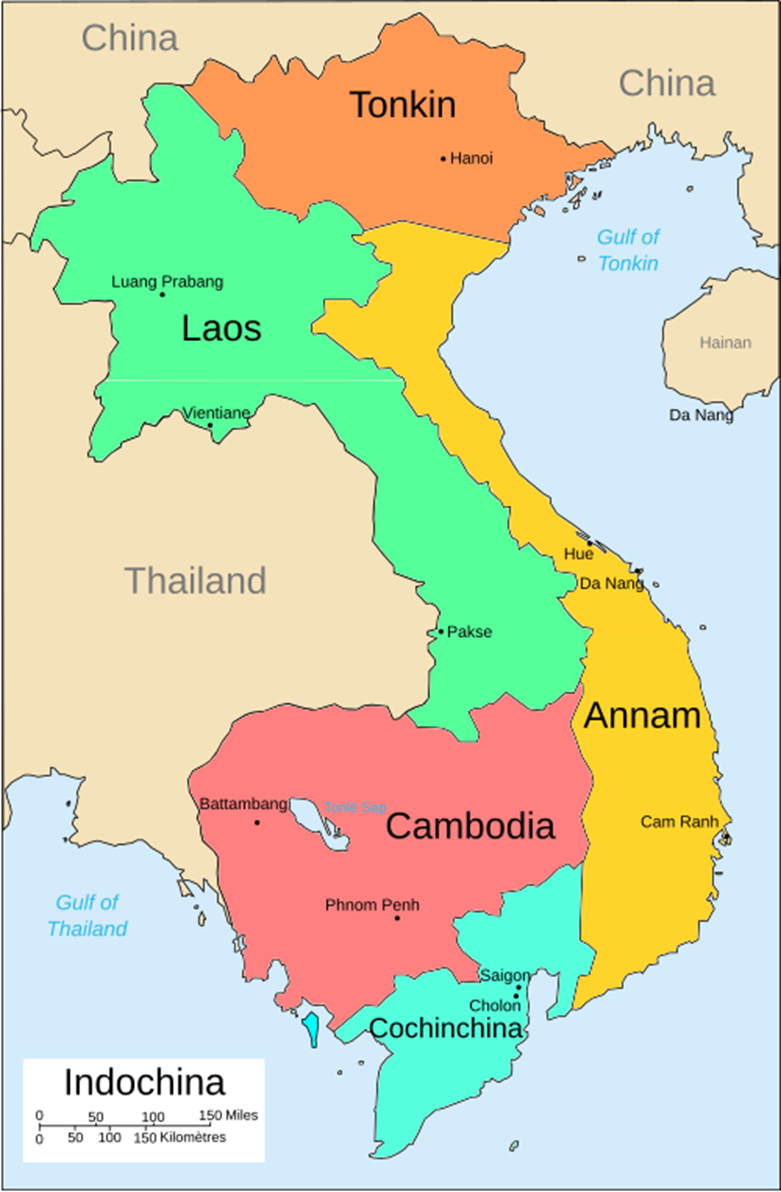
Cambodia fell under French colonial dominion in 1863, enduring nearly 90 years of foreign rule. Led by King Norodom Sihanouk, the country secured its independence on November 9, 1953. The significance of this victory is seared in the national psyche, and the Independence Monument was erected five years later to honor the achievement and those who fought or died for national sovereignty.
The monument’s construction and inauguration were spearheaded by Prince Norodom Sihanouk, Cambodia’s leading figure in the independence movement. The date of the monument’s inauguration, November 9, 1962, underscored a symbolic link to the very day Cambodia regained its freedom.
Architectural Style and Symbolism
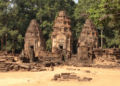
The architectural grandeur of the Independence Monument is the work of Vann Molyvann, Cambodia’s most influential post-independence architect. Inspired by the ancient towers of Angkor Wat and the Bakong Temple, the monument follows the form of a lotus-shaped stupa, a motif deeply rooted in Khmer spiritual and artistic tradition. Rising to a height of 37 meters, the monument is visible from distant parts of the city.
Its multiple levels are crowned with one hundred naga heads, representations of the mythical serpent, integral to Cambodian iconography and history. The stupa is finished in reddish marble that echoes the colors of the famed Banteay Srei temple, while grey Chinese marble lines its steps and precincts.
The pinnacle is crowned by a sculpted flame, crafted by French goldsmiths, symbolizing eternal liberty and remembrance. The entire edifice pays tribute not only to independence, but to all those who have sacrificed their lives in the defense of the nation.
Strategically placed at the intersection of Sihanouk Boulevard and Norodom Boulevard, two of Phnom Penh’s major arteries, the Independence Monument punctuates the capital’s urban landscape. It is adjacent to the statue of King Norodom Sihanouk and within easy walking distance from the Royal Palace, making it a central node for both locals and visitors.
Ceremonies and National Celebrations
The monument serves as the epicenter for national ceremonies marking Independence Day (November 9) and Constitution Day. On these occasions, royal and government officials light a ceremonial flame and honor the memory of Cambodian patriots with floral wreaths, drawing large crowds and extensive national attention. At night, the monument is illuminated in the red, blue, and white colors of the Cambodian flag, amplifying its visual and symbolic resonance across the city.
Although the structure itself is not open to the public, the broad park and plaza surrounding the monument act as a communal space. Locals frequent the area for jogging, strolling, or gathering for evening festivities, while tourists are drawn to the monument’s unique profile, often lingering for sunset viewings and nighttime illuminations.
Vann Molyvann, educated in France and later the chief national architect, injected a blend of modernist sensibility and traditional Khmer forms into the Independence Monument. His design established a template for post-independence Cambodian public architecture, influencing the nation’s built environment far beyond Phnom Penh. The monument represents not only national memory, but also a commitment to modernity harmonized with heritage; it is unequivocally contemporary yet unmistakably Khmer.
Symbolic and Social Significance
The lotus shape is a traditional Buddhist and Hindu symbol, signifying purity, resilience, and spiritual awakening—qualities resonant with Cambodia’s journey towards self-determination. The nagas reinforce themes of protection and regeneration, linking the monument to broader Southeast Asian mythologies and the living spiritual landscape of Cambodia.
Moreover, the monument grows in importance, year after year, as a site for reflection on the costs of war, commemorating both those who fell during the struggle for independence and the victims of later conflicts.
The Independence Monument is more than a physical structure. It is a dynamic symbol that encapsulates both the pain and the triumphs of modern Cambodian history. Through masterful architectural design, poignant national ceremonies, and its role as an enduring public space, the monument stands, lotus-topped and naga-guarded, as a beacon of Cambodia’s hope, memory, and pride.