

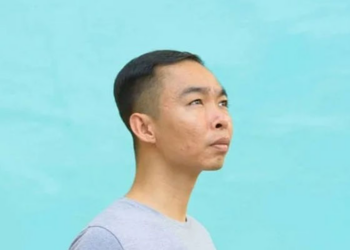
Tith Veasna is a prominent Cambodian textile artist, curator, and educator whose vibrant work exemplifies resilience, memory, and cultural renewal in the nation’s evolving art scene. Her creative innovations are rooted in both personal history and years spent teaching at the Royal University of Fine Arts (RUFA) in Phnom Penh, making her a key figure in shaping contemporary Cambodian art.

Early Life and Artistic Formation
Born in 1984, Tith Veasna’s (Khmer: ទិត្យ វាសនា) early experiences were shaped by Cambodia’s turbulent post-Khmer Rouge years. Witnessing her family’s struggles and the healing process after the regime deeply impacted her artistic vision.
Veasna’s artistic talents blossomed at RUFA, where she later returned as a teacher to guide the next generation of artists. Her specialization in textile design—especially the krama, Cambodia’s iconic checked scarf—became her signature, drawing connections between personal recollection and national identity.
Textile Innovation and Mixed Media
Veasna’s installations and artworks frequently combine locally sourced fabrics with mixed media, echoing the tactile realities and communal memories of Cambodian life. Works such as “Blind Pins,” featuring symbolic pins on black cloth, explore mourning, survival, and the enduring presence of the past. Her use of textiles is both a technical achievement and a form of storytelling that honors tradition while critically engaging with contemporary issues, particularly women’s roles in culture.
Teaching at Royal University of Fine Arts (RUFA)
Central to Veasna’s impact is her teaching career at RUFA, Cambodia’s premier arts institution. For years, she has taught courses in textile design, installation art, and visual culture, mentoring students through both technical and conceptual challenges. Her classroom is known for openness and experimentation; she encourages students to reflect deeply on social history, collective trauma, and the responsibilities of creative work.
Veasna’s teaching philosophy emphasizes art as a tool for personal healing and societal change, urging students to use their craft to bear witness, preserve memory, and spark dialogue. Many of her pupils have gone on to become influential artists, spreading her legacy throughout Cambodia’s cultural renaissance.
Her outreach often extends beyond the classroom, with Veasna organizing workshops and community projects that bring art to underrepresented groups, foster collaboration, and cultivate critical thinking. She is celebrated for nurturing talent and empowering young women to pursue careers in art—a mission vital for a country where female artists still fight for recognition.
Curatorship and Advocacy for Female Artists
As a founding curator for Selapak Neari, Cambodia’s pioneering female-led art collective, Veasna is at the forefront of promoting equitable artistic participation. She has organized cross-regional exhibitions that showcase women’s perspectives, build community, and challenge traditional gender roles. Her curatorial efforts are grounded in both technical expertise and a passionate commitment to social progress.
Recent Exhibitions and International Recognition
Veasna’s work and leadership have gained international traction, including a celebrated residency at The National Art Gallery in Singapore as part of the Singapore International Foundation’s Art Associates program. Her studies in textile engineering at Donghua University in Shanghai further enriched her contemporary practice.
Artistic Philosophy and Legacy
Veasna’s creative philosophy centers on confronting historical silence and fostering collective healing through art. “Art cannot change society directly,” she has stated, “but it empowers people to seek meaning and reconciliation.” Her practice—whether behind the canvas, in the classroom, or as a curator—demonstrates how Cambodian artists can preserve memory and inspire new narratives, especially for women and marginalized groups.
Through her teaching, curatorship, and art, Tith Veasna has not only advanced textile art in Cambodia—she has become a guiding force in the country’s cultural transformation, championing inclusivity, historical awareness, and the power of creative expression.
















Comments 1