In the history of modern Cambodia, Prince Norodom Sihanouk is remembered for many roles: monarch, statesman, revolutionary, and cultural patron. Yet, one of his most unusual and fascinating legacies lies in cinema. Between politics and diplomacy, Sihanouk managed to carve out time and passion for filmmaking, leaving behind a body of work that reflects not only his artistic impulses but also the political turbulence of his era. His cinema was a mirror of modern Cambodia—both the dreams of a young nation and the dilemmas of a leader caught between tradition and change.

Beginnings of a Royal Filmmaker
Norodom Sihanouk’s interest in cinema began at an early stage. Educated in both Cambodia and abroad, he was exposed to European film from the 1930s and 1940s, at a time when moving pictures were becoming a powerful cultural force worldwide. His fascination with storytelling and aesthetics merged with his love of music and theater. For him, film was never just entertainment—it was education, propaganda, and cultural preservation rolled into one.
When he ascended to the throne in 1941 and later, after leading Cambodia to independence in 1953, Sihanouk began to see cinema as a tool for shaping national identity. Cambodia had a deeply rooted tradition of oral literature, dance, and music, but the modern cinematic form offered a chance to speak not just to Cambodians but to the world. The prince, who was already known as a prolific composer and writer of songs, extended his creative ambitions naturally into moving images.
Film as Statecraft
For Sihanouk, cinema was political. After independence, he founded the Royal Khmer Cinema, and under his guidance films became intertwined with the nation’s cultural diplomacy. He frequently used cinema to present Cambodia as a modern, sovereign state, yet one proud of its ancient traditions. His productions often highlighted themes of national unity, development, and morality.
This was not unusual for the era. Across the world in the 1950s and 1960s, leaders used mass media to cement identity and loyalty. But what set Sihanouk apart was how directly he participated. He did not simply sponsor national cinema—he starred in, directed, wrote, and produced films himself. Few heads of state ever embraced the camera as intimately as he did.
Themes and Style
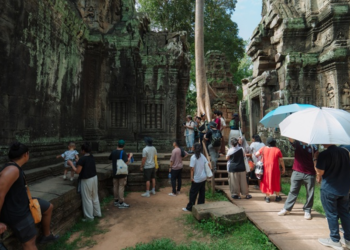
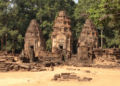
Sihanouk’s films ranged widely in style and theme. Some were romantic dramas with moral lessons, others more overtly political or propagandistic. There were also works that reflected his love for Cambodia’s landscapes, architecture, and culture. Angkor Wat, Phnom Penh’s boulevards, and the countryside often appeared not just as settings but as characters in themselves.
Many of his films emphasized values of loyalty, familial duty, and patriotism. Romantic entanglements in his stories often carried symbolic weight—mirroring tensions between tradition and modernity, or between foreign influence and Cambodian sovereignty. When one looks closely, the narrative arcs frequently resembled parables, coded messages about the nation’s destiny and the prince’s own vision for it.
Stylistically, his films bore influence from French poetic realism, Italian neorealism, and later French New Wave cinema. Yet, they were filtered through the rhythms of Cambodian performance traditions—classical dance, popular song, and moral storytelling. The result was eclectic, uneven at times, but always distinctively his.
Sihanouk On Screen
An amusing yet telling feature of his cinema was the prince himself appearing on screen. He not only directed but often took leading roles, acting as soldier, lover, or moral authority. To some, this was vanity; to others, it was a symbol of personal commitment. For Sihanouk, the camera was an extension of his public persona. By embodying roles in his own films, he fused the positions of statesman and storyteller. The prince became not just a maker of cinema but cinema’s living subject.
Cinema and Cultural Legacy
Sihanouk’s love for filmmaking continued even during periods of political exile. Wherever he was—Beijing, Pyongyang, or Paris—he carried his passion for film. Leaders like Kim Il-Sung recognized this enthusiasm, sometimes offering him the means to continue his work abroad. Even outside Cambodia, cinema allowed him to maintain a link to his identity as a cultural leader.
During the golden age of Cambodian cinema in the 1960s and early 1970s, when Phnom Penh’s theaters showed a vibrant range of local productions, Sihanouk’s works stood alongside films by other Cambodian directors. Though some cinephiles considered his direction too didactic or self-centered, his involvement gave legitimacy and public attention to the national industry. Ordinary Cambodians, seeing their head of state behind the camera, could feel a sense of pride in their country’s cultural renaissance.
Collapse and Loss
The Khmer Rouge years dealt a devastating blow to Cambodian cinema. The majority of the films produced before 1975 were destroyed. Many actors, directors, and technicians were executed or perished in the turmoil. Among the ruined cultural treasures were much of Sihanouk’s own cinematic legacy.
Yet remarkably, some of his films survived. In later years, restoration efforts and screenings in international festivals brought renewed attention to his work. For global audiences, they offered a rare window into Cambodia’s aspirations before the catastrophe of the 1970s.
The Dual Identity of Sihanouk
What makes Sihanouk’s cinematic career so fascinating is its dual nature. On the one hand, it was a labor of love, an aristocrat’s passion for art. On the other hand, it was always entangled with his politics. Every frame contained not only an aesthetic impulse but also a political message, sometimes subtle, sometimes overt.
His role as both creator and ruler complicates how we judge his work. Was he a filmmaker who happened to be a king, or a king who dabbled in filmmaking? Perhaps he was both, inseparably so. His cinema cannot be separated from his historical persona—the Prince Father, as Cambodians later called him.
Final Years and Reflection
Even in his later years, after abdicating the throne and stepping back from politics, Sihanouk maintained affection for cinema. Interviews reveal him reflecting fondly on his days of directing, recalling the difficulties of production but also the joy of artistic creation. Although Cambodia’s film industry never fully regained its pre-war vibrancy, the symbolic weight of his cinematic experiments remained.
Today, when young Cambodians discover that their former monarch once starred in and directed films, the reaction is often surprise mixed with curiosity. In a region where rulers traditionally projected formality and distance, Sihanouk’s playful embrace of the camera stands out as uniquely human.
Conclusion
Norodom Sihanouk’s cinema was never merely about film. It was about identity, propaganda, creativity, and legitimacy. The films may not always reach the technical heights of world cinema, but they carry an unusual historical value—as artifacts of a leader’s vision for his country. Through cinema, Sihanouk tried to imagine Cambodia as modern yet rooted, open to the world but true to its culture.
In the end, Sihanouk’s cinema is remembered not only for its artistic merits or flaws, but for the image of a royal leader with a camera in hand, directing his people not just politically but also artistically. Like his reign, it was ambitious, contradictory, often flamboyant, yet deeply tied to Cambodia’s fate.
Prince Norodom Sihanouk filmography is available on Wikipedia.