
The Khmer script (អក្សរខ្មែរ âksâr khmêr) is the official writing system of Cambodia, used primarily for the Khmer language, but also adapted for Pali, Sanskrit, and some minority languages. It is an abugida: each consonant carries an inherent vowel sound that can be altered by diacritics. The script is one of the most complex in the world, both in terms of visual forms and phonetic rules.
1. Historical Background
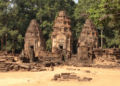
Khmer script evolved from the Pallava script of southern India, itself derived from the Brahmi script. This writing tradition entered Southeast Asia through Indian cultural and religious influence around the 6th century CE. The earliest inscriptions in Khmer date to the early 7th century, carved into stone in temple complexes such as Sambor Prei Kuk.
The script was originally used for Old Khmer, Sanskrit, and Pali, particularly in religious and royal contexts. Over centuries, the script adapted to reflect changes in pronunciation and vocabulary, leading to the modern Khmer alphabet used today.
2. Structure of the Script
Khmer script consists of:
1. Consonants – 33 primary consonants, each belonging to one of two series:
* Series A (*â* series) – inherent vowel /ɑː/
* Series O (*ô* series) – inherent vowel /ɔː/
2. Subscript consonants – forms used to write clusters, placed above, below, on one side or on both sides of the main consonant.
3. Dependent vowels – vowel signs attached to consonants to modify the inherent vowel.
4. Independent vowels – stand-alone vowel symbols, often used to write words of Indic origin.
5. Diacritics – marks that change pronunciation, suppress vowels, or indicate final consonants.
6. Numerals – Khmer has its own numeral set: ០ ១ ២ ៣ ៤ ៥ ៦ ៧ ៨ ៩.
3. Consonants and IPA Table
Below is the complete list of Khmer consonants, their subscript forms, names, and IPA values.
| Letter | Subscript | Name (Khmer) | Name (Latin) | Series | IPA |
| ក | ្ក | ក កា (kâ) | ka | A | [kɑː] |
| ខ | ្ខ | ខ ខា (khâ) | kha | A | [kʰɑː] |
| គ | ្គ | គ គា (ko) | ko | O | [kɔː] |
| ឃ | ្ឃ | ឃ ឃា (kho) | kho | O | [kʰɔː] |
| ង | ្ង | ង ងា (ngâ) | nga | A | [ŋɑː] |
| ច | ្ច | ច ចា (châ) | cha | A | [cɑː] |
| ឆ | ្ឆ | ឆ ឆា (chhâ) | chha | A | [cʰɑː] |
| ជ | ្ជ | ជ ជា (cho) | cho | O | [cɔː] |
| ឈ | ្ឈ | ឈ ឈា (chho) | chho | O | [cʰɔː] |
| ញ | ្ញ | ញ ញា (nhâ) | nya | A | [ɲɑː] |
| ដ | ្ដ | ដ ដា (dâ) | da | A | [ɗɑː] |
| ឋ | ្ឋ | ឋ ឋា (thâ) | tha | A | [tʰɑː] |
| ឌ | ្ឌ | ឌ ឌា (do) | do | O | [ɗɔː] |
| ឍ | ្ឍ | ឍ ឍា (tho) | tho | O | [tʰɔː] |
| ណ | ្ណ | ណ ណា (nâ) | na | A | [nɑː] |
| ត | ្ត | ត តា (tâ) | ta | A | [tɑː] |
| ថ | ្ថ | ថ ថា (thâ) | tha | A | [tʰɑː] |
| ទ | ្ទ | ទ ទា (to) | to | O | [tɔː] |
| ធ | ្ធ | ធ ធា (tho) | tho | O | [tʰɔː] |
| ន | ្ន | ន នា (nô) | no | O | [nɔː] |
| ប | ្ប | ប បា (bâ) | ba | A | [ɓɑː] |
| ផ | ្ផ | ផ ផា (phâ) | pha | A | [pʰɑː] |
| ព | ្ព | ព ពា (po) | po | O | [pɔː] |
| ភ | ្ភ | ភ ភា (pho) | pho | O | [pʰɔː] |
| ម | ្ម | ម មា (mô) | mo | O | [mɔː] |
| យ | ្យ | យ យា (yâ) | ya | A | [jɑː] |
| រ | ្រ | រ រា (rô) | ro | O | [rɔː] |
| ល | ្ល | ល លា (lô) | lo | O | [lɔː] |
| វ | ្វ | វ វា (vô) | vo | O | [ʋɔː] |
| ស | ្ស | ស សា (sâ) | sa | A | [sɑː] |
| ហ | ្ហ | ហ ហា (hâ) | ha | A | [hɑː] |
| ឡ | ្ឡា | ឡ ឡា (lâ) | la | A | [lɑː] |
| អ | ្អ | អ អា (’â) | ’a | A | [ʔɑː] |
4. Vowels
Khmer vowels are divided into dependent vowels (attached to consonants) and independent vowels (stand-alone). Dependent vowels take different pronunciations depending on whether they follow a Series A or Series O consonant.
Example:
* ា (after Series A: /aː/, after Series O: /iə/)
* ុ (after Series A: /o/, after Series O: /u/)
4.1 Dependent Vowel Table
| Vowel sign | After Series A | After Series O | IPA (A) | IPA (O) |
| ា | aː | iə | [aː] | [iə] |
| ិ | ɨ | e | [ɨ] | [e] |
| ី | ɨː | iː | [ɨː] | [iː] |
| ឹ | ɨə | ɨ | [ɨə] | [ɨ] |
| ឺ | ɨəː | ɨː | [ɨəː] | [ɨː] |
| ុ | o | u | [o] | [u] |
| ូ | oː | uː | [oː] | [uː] |
| ួ | uə | uə | [uə] | [uə] |
| េ | eː | iː | [eː] | [iː] |
| ែ | ae | iː | [ae] | [iː] |
| ៃ | aj | əj | [aj] | [əj] |
| ោ | oː | ou | [oː] | [ou] |
| ៅ | aw | əw | [aw] | [əw] |
4.2 Independent Vowel Table
| Independent Vowel | IPA | Typical Main Romanization |
| ឥ | [ʔə], [ʔɨ], [ʔəj] | ĕ, e |
| ឦ | [ʔəj] | ei |
| ឧ | [ʔo], [ʔu], [ʔao] | o |
| ឩ | [ʔou], [ʔuː] | ou |
| ឪ | [ʔəw] | au |
| ឫ | [rɨ] | rue |
| ឬ | [rɨː] | rueu |
| ឭ | [lɨ] | lue |
| ឮ | [lɨː] | lueu |
| ឯ | [ʔae], [ʔɛː], [ʔeː] | Ae |
| ឰ | [ʔaj] | Ai |
| ឱ, ឲ | [ʔao] | Ao |
| ឳ | [ʔaw] | Au |
5. Writing Rules and Features
* Clusters – Subscript consonants create consonant clusters without an intervening vowel.
* Inherent vowels – If no vowel sign is added, the consonant retains its series vowel.
* Diacritics – Examples: nikahit (◌ំ) for nasalization, musĕkâtônd (◌ះ) for final /h/.
* No spaces between words – Khmer script traditionally uses spaces only to separate phrases or sentences.
6. Modern Usage
Today, Khmer script is used in:
* Education – Primary through tertiary instruction.
* Media – Newspapers, television, online platforms.
* Religious texts – Pali and Sanskrit in Buddhist liturgy.
* Art and heritage – Temple inscriptions, signage, manuscripts.
Digital technology has increased its visibility, but challenges remain in Unicode rendering, especially for subscripts and diacritics in some systems.
7. Cultural Significance
The Khmer script is more than just a writing system — it is a cultural symbol. Its shapes appear in temple inscriptions, calligraphy, and contemporary design. Its historical continuity links modern Cambodians to the ancient Khmer Empire, and its complexity reflects the richness of the language.
Conclusion
The Khmer script is both a linguistic tool and a cultural treasure, with deep historical roots and modern-day relevance. Its elegant curves and intricate diacritics are instantly recognizable, while its phonetic system captures the nuances of the Khmer language. Mastering it requires patience, but for linguists, historians, and learners, it offers a direct connection to the heritage of Cambodia.