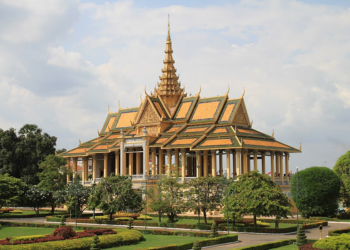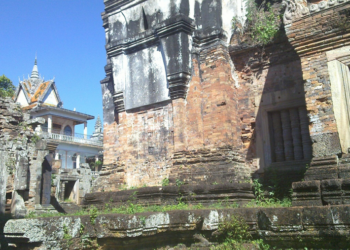
A visual journey through Angkor, where monumental Khmer architecture meets the fragile photographic record of the nineteenth century.
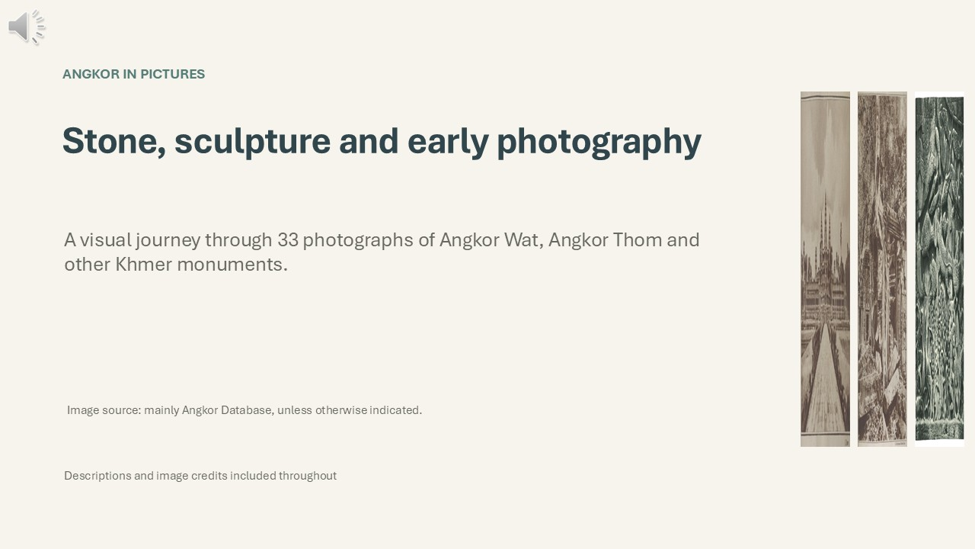
Angkor is often experienced as a vast landscape of temples, towers and carved faces. This video offers another way of seeing it: through 33 photographs that move from the familiar grandeur of Angkor Wat to the galleries of Angkor Thom, then into remarkable early images made when photography itself was still a demanding craft. Together, they reveal not only monuments, but changing ways of looking at Cambodia’s ancient heritage.
Angkor Through the Lens
There is something quietly powerful about looking at Angkor through photographs made more than a century ago. The stones are familiar, yet they seem slightly different. Vegetation presses closer to the monuments, surfaces appear more weathered, and the absence of modern crowds gives the ruins an almost suspended quality.
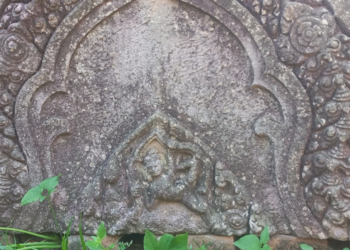
This visual journey begins with Angkor Wat, its towers rising beyond the great causeway and moat. From there, the images linger over details that can easily disappear when confronted with the scale of the monument: devatas and apsaras, narrative bas-reliefs, corridors and sculpted surfaces.
The effect is less a conventional tour than a slow act of looking. Stone becomes the subject. Light catches a carved face or a line of ornament. A distant gallery creates a sense of depth. Trees frame a ruin that has survived long enough to become part of the landscape itself.
Angkor is not a single monument but a vast archaeological landscape. UNESCO describes the World Heritage property as extending across approximately 400 square kilometers and containing the remains of successive Khmer capitals dating from the ninth to the fifteenth centuries.
From Angkor Wat to Angkor Thom
The video moves beyond Angkor Wat to several monuments that together demonstrate the extraordinary range of Khmer architecture and sculpture.
At Banteay Srei, finely carved surfaces reveal an almost jewel-like attention to detail. Ta Prohm offers a very different atmosphere, where vegetation and masonry appear inseparable. Preah Khan continues this dialogue between architecture and landscape, with long galleries and trees creating a distinctive sense of depth and mystery.
The journey then enters Angkor Thom, the great royal city associated particularly with Jayavarman VII. Its monuments include the Bayon, the Royal Terrace, the Terrace of the Elephants and the Terrace of the Leper King.
The Bayon is especially striking. Its labyrinthine architecture, dense decoration and monumental face towers make it one of the most distinctive temples in the Angkor complex. UNESCO notes that the temple was constructed during the late twelfth and early thirteenth centuries and remains an important Buddhist site.
The Terrace of the Elephants, meanwhile, formed part of the ceremonial center of Angkor Thom. According to the APSARA National Authority, the 300-meter-long terrace served as a viewing platform from which the king and his retinue could watch processions and public ceremonies. Its carved elephants, lions and garudas still provide one of the most memorable sculptural landscapes of Angkor Thom.
When Photography Met Angkor
Perhaps the most fascinating part of the presentation comes when the modern viewer encounters Angkor through nineteenth-century photography.
Several photographs in the video are associated with John Thomson, who photographed Angkor in 1866. His images are more than picturesque records. They document architectural details, galleries, sculpture and ruined structures at a particular moment in the history of the monuments.
Thomson’s surviving photographs include views of Angkor Wat, sculpted figures, bas-reliefs and Angkor Thom. His work is preserved in collections such as the Wellcome Collection and is also extensively documented by Angkor Database.
Seen today, these photographs create an intriguing conversation between past and present. The temples have not simply survived unchanged. They have been photographed, studied, restored and interpreted across generations.
The video also includes photographs credited to the École française d’Extrême-Orient, Martin Hürlimann and Thérèse Le Prat, alongside images whose original creator is not identified in the available metadata. The presentation itself identifies Angkor Database as its principal image source and provides individual credit notes throughout.
Details Worth Looking For
One pleasure of exploring Angkor through photographs is discovering how much can be missed when we concentrate only on the famous monuments.
Look closely at the devatas. Their hairstyles, jewelry and poses are remarkably varied. Examine the bas-reliefs at Angkor Wat, where processions and narrative scenes unfold across the galleries. At Baphuon, notice the strong geometry of the architecture and the surviving carved surfaces.
Then compare the historical photographs with what Angkor looks like today. Trees that once dominated a composition may have changed. Paths and clearings may look different. Yet the essential character of the monuments remains.
For photographers, these archival images also offer an unexpected lesson: composition has long mattered at Angkor. A corridor, a gateway, a sculpted figure or a tree growing beside a wall can transform an architectural record into a compelling image.
Travel Tips for Exploring Angkor
The monuments featured in the video are located within the Angkor Archaeological Park near Siem Reap.
Early morning remains an excellent time for photography, particularly when softer light emphasizes reliefs and stone textures. The cooler hours are also more comfortable for walking.
Allow plenty of time rather than trying to see everything in one visit. Angkor is a landscape as much as a collection of temples, and some of its most rewarding details emerge slowly.
The wider park also contains villages and agricultural landscapes. UNESCO emphasizes that Angkor remains an inhabited cultural landscape, with communities living within the archaeological area and practicing agriculture, particularly rice cultivation.
Watch the Video
Experience the atmosphere for yourself by watching Angkor in Pictures: Stone, Sculpture and Early Photography below.
After watching, follow the Wonders of Cambodia YouTube channel for more visual journeys through Cambodia’s history, culture, temples, traditions, food and everyday life:
Wonders of Cambodia on YouTube
Conclusion
Angkor has been photographed countless times, but every generation sees it differently. The 33 images in this presentation remind us that the monuments are not frozen relics. They are part of a long story of Khmer civilization, memory, exploration, conservation and changing perceptions of Cambodia.
From the polished grandeur of Angkor Wat to the vegetation-covered ruins of Ta Prohm and the monumental faces of the Bayon, these photographs invite us to slow down and look again.
Keep exploring Cambodia with Wonders of Cambodia, where history, culture and everyday life come together in stories worth discovering.
Information Box
Location: Angkor Archaeological Park
Province: Siem Reap Province
Category: History, Architecture, Photography, Cultural Heritage
Filmed by: Wonders of Cambodia
Visual sources: Mainly Angkor Database, with individual historical image credits shown in the video