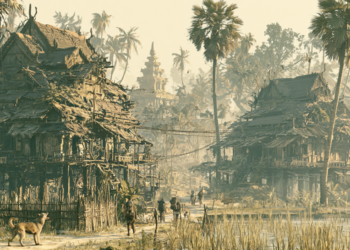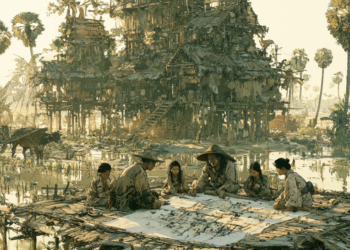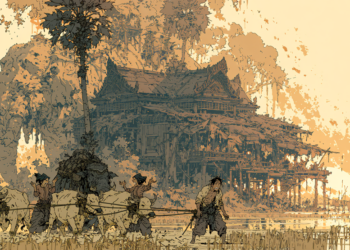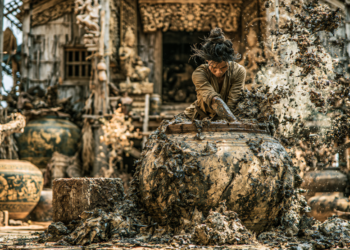
Khmer proverbs often encode economic and social realities in vivid, indirect language. The saying “ច្របាច់កចិន លៀនអណ្ដាតខ្មែរ” reflects a chain reaction in society, where pressure placed on powerful traders ultimately falls on ordinary Khmer people.
Khmer: ច្របាច់កចិន លៀនអណ្ដាតខ្មែរ
Transcription: chrabach kor chen lien andat khmae
Literal translation: twisting a Chinese neck, sticking out a Khmer tongue
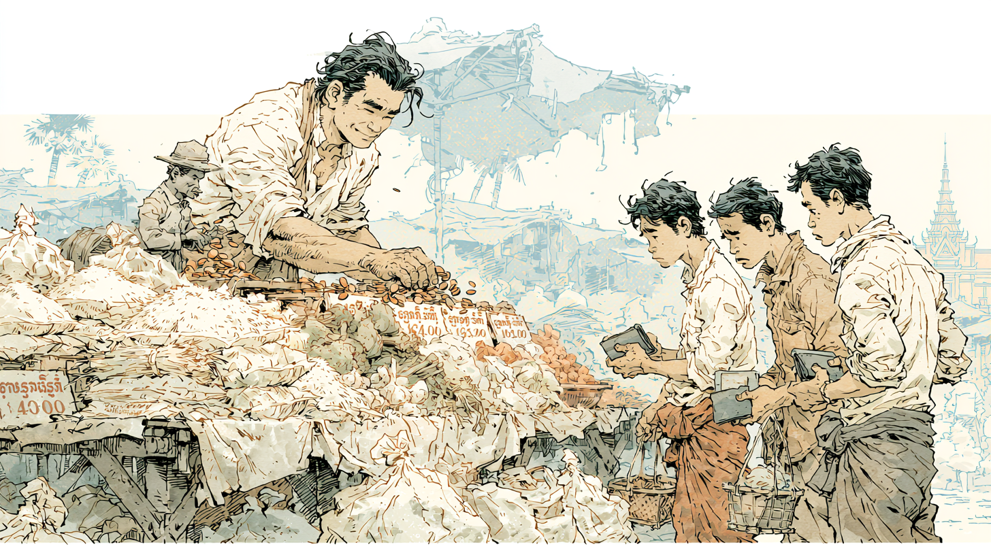
The proverb creates a striking image: pressure is applied to the “Chinese neck,” while the “Khmer tongue” reacts. Historically, “Chinese” in this context refers not to ethnicity alone, but to merchants, traders, or investors who play a central role in commerce. The “Khmer tongue” represents ordinary people, the consumers.
The image suggests a cause and effect. One group is squeezed, but another group visibly reacts.
The deeper meaning is economic and social. When authorities impose taxes or financial pressure on large traders or investors, those traders pass the burden on by raising prices. In the end, it is the general population, Khmer consumers, who feel the impact.
The proverb highlights how power and cost move through society. It is a reminder that policies aimed at one group often affect another, especially those with less control.
This dynamic is still visible today:
- When import taxes rise, market prices increase, and everyday shoppers pay more for basic goods.
- When large companies face higher operating costs, they adjust prices or fees, affecting customers directly.
- In urban areas, rising rents for businesses often lead to higher prices for food, services, and daily necessities.
In each case, the initial pressure does not stay where it begins.
English expressions like “The costs are passed on to the consumer” and “When elephants fight, the grass suffers” capture similar ideas of indirect impact and unequal burden. In French, “Les petits paient pour les grands” and “Quand les puissants se battent, le peuple souffre” echo this logic. What makes the Khmer proverb unique is its concrete link to trade culture, using the imagery of merchants and everyday people in a distinctly local context.
When prices rise, have you ever wondered where the pressure really began?