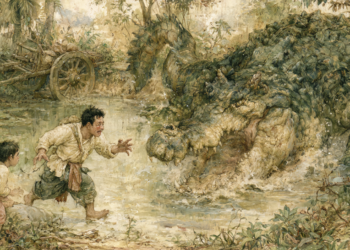
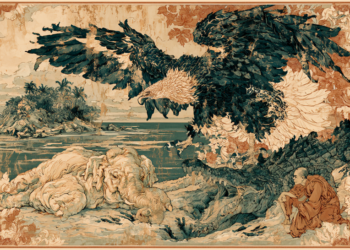
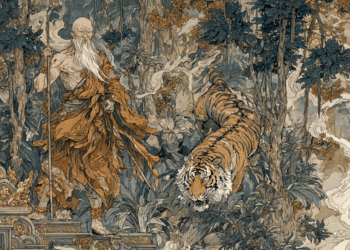
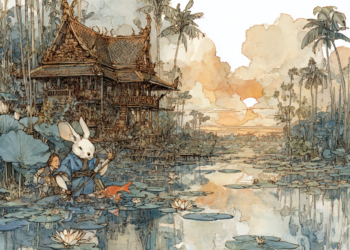
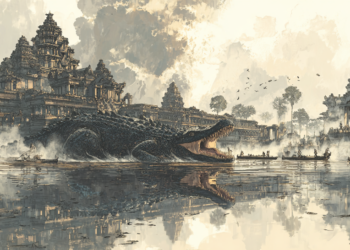
The legend of Preah Ko Preah Keo (ព្រះគោ ព្រះកែវ) occupies a cherished place in the heart of Cambodian oral tradition. Passed down through generations by monks, storytellers, and village elders, it is more than a myth—it embodies deep moral lessons, political symbolism, and a reflection of Cambodia’s spiritual and cultural struggles. Told in pagodas, classrooms, and on festival stages, the story of Preah Ko (the Sacred Ox) and Preah Keo (the Sacred Prince) represents both the divine protection and tragic vulnerability of the Khmer kingdom.

The tale’s earliest roots lie in the post-Angkorian era, when Cambodia faced repeated threats from neighboring Siam (modern Thailand) and internal decline. In that historical setting, storytellers imagined two miraculous brothers whose fates mirrored the destiny of the Khmer land itself. Whether read as myth or allegory, the legend gave voice to the longing for unity and divine justice in a time of loss.
According to folklore, Preah Ko and Preah Keo were born in mysterious circumstances. Some oral traditions claim that Preah Ko was a talking white ox with luminous eyes who possessed miraculous powers, while Preah Keo was his human brother endowed with divine wisdom and virtue. Together, they became inseparable companions, traveling through the Khmer kingdom to bring prosperity wherever they went. Their bond illustrated the harmony between nature and humanity, strength and intellect, material and moral power.
In most versions of the tale, Preah Ko and Preah Keo lived in a remote region near a sacred forest, serving as protectors of Buddhist teachings. Preah Keo, wise beyond human measure, collected sacred scriptures and relics; Preah Ko could foresee danger and defend their treasures with supernatural might. One day, news reached Siam of their existence and the extraordinary wealth of wisdom they guarded. The Siamese king, driven by both curiosity and greed, desired to capture them and bring their powers to Ayutthaya.
The Khmer king refused to yield the brothers, recognizing them as divine protectors sent by the Buddha to preserve the kingdom. But his army could not withstand the strength of Siam’s forces. In one of the legend’s most poignant moments, Preah Ko and Preah Keo decided to sacrifice their freedom for the safety of their people.
The Abduction and the Lost Treasures
The Siamese army eventually captured the brothers and took them away toward the west. According to the story, Preah Ko wept so deeply that his tears formed lakes and rivers along the route from Cambodia to Thailand. When he turned back to look at his homeland for the last time, his tears created Tonle Bati or a series of ponds still believed to hold sacred water.
In some retellings, the Siamese king, after realizing the brothers’ magical powers, imprisoned them in separate temples to prevent them from uniting their strength again. The treasures and sacred scriptures guarded by Preah Keo were also seized, symbolizing the loss of Cambodia’s cultural and spiritual wealth. To many Cambodians, this loss represents the historical plundering of Khmer art, sculpture, and relics during periods of conflict, especially the transfer of many sacred items to the ancient Siamese capital.
Throughout history, the legend of Preah Ko Preah Keo has been reinterpreted in multiple ways. For the devout, it is a moral allegory about faith, loyalty, and compassion. Preah Keo’s purity reflects the wisdom of the Buddha, while Preah Ko’s strength represents the power of devotion and resilience. Their separation signifies the disunity that brings misfortune to the nation.
For historians, the story resonates as a poetic remembrance of Cambodia’s national suffering and resistance. The brothers’ abduction stands for the loss of Khmer sovereignty and cultural treasures in the wake of Siamese invasions that followed the fall of Angkor. Likewise, their prophesied return—an element repeated in some oral versions—embodies popular hope for a spiritual and cultural revival of Cambodia.
Today, the story of Preah Ko and Preah Keo remains alive in Cambodian cultural life. It appears in illustrated children’s books, dramatic plays, shadow puppet performances, and pagoda murals. The pair’s imagery also serves as symbols of national identity—figures of unity and moral fortitude in the face of adversity.
Some temples dedicate special altars to Preah Ko and Preah Keo, where devotees light incense and pray for protection or good fortune. The brothers are commonly invoked during times of social unrest or national mourning. In many rural regions, parents encourage children to follow the example of Preah Keo’s honesty and Preah Ko’s loyalty, emphasizing that harmony between mind and heart leads to strength.
Variations and Regional Versions
Different Cambodian provinces tell slightly different versions of the story. In some local narratives, the brothers are depicted as royal siblings transformed by divine intervention—Preah Keo becomes a human embodiment of virtue, while Preah Ko is his guardian spirit. In others, they represent reincarnations of ancient sages sent by the gods to bless the Khmer land.
A few versions also shift the ending: after centuries of imprisonment, the brothers are foretold to return when Khmer people regain full harmony with the teachings of the Buddha. This eschatological element connects the myth with Cambodia’s hopes for spiritual renewal and cultural continuity.
Interestingly, Thai folklore also includes references to “Phra Kao” and “Phra Ko,” though with distinct names and symbolic meanings. This overlap suggests that the myth likely evolved through centuries of cross-cultural contact, reflecting shared regional beliefs but rooted in Cambodia’s experience of loss and resilience.
Moral and Philosophical Lessons
At its core, the story of Preah Ko and Preah Keo teaches interconnected lessons:
- The unity of wisdom and strength safeguards truth and justice.
- Loyalty to one’s people and culture is sacred, even when facing defeat.
- Greed and attachment to power lead to conflict and decay.
- True treasures are not material objects but spiritual virtues—faith, compassion, and harmony.
Many Cambodian educators use this legend as an ethical teaching tool, demonstrating that moral values endure even after physical loss. The brothers’ story reminds audiences that Cambodia’s greatest wealth lies in its cultural resilience and inner peace, not merely in its material relics.
In modern times, Preah Ko and Preah Keo continue to represent Cambodia’s spiritual identity. Their names have been adopted by pagodas, schools, and cultural societies across the country. During national celebrations, plays about them are performed as moral allegories encouraging unity and compassion among citizens.
The legend also maintains a powerful presence in collective memory. In popular belief, when social injustice or corruption grows severe, the spirits of Preah Ko and Preah Keo are said to weep once more—reminding leaders and people alike to restore balance and virtue.
The legend of Preah Ko Preah Keo endures as one of Cambodia’s most profound cultural treasures. It blends history, religion, and national identity into a single story of loss and hope. Whether seen as a lament for the past or a prophecy for renewal, it continues to shape the Khmer imagination and moral vision.
For Cambodians today, Preah Ko and Preah Keo are not distant mythical figures but living symbols of what binds the nation together: compassion, unity, and enduring faith in the power of goodness.